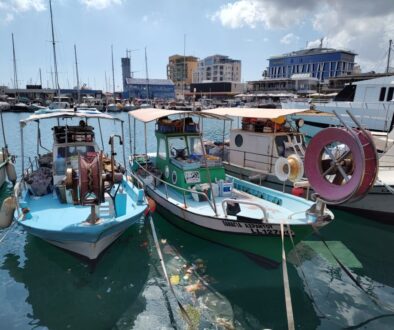

European Parliament Resolution Calling for CFP Reform: not fit for purpose for small-scale coastal fleets
As well as recognition, small-scale coastal fleets need a differentiated approach, with space and secure access to resources and markets – not just sympathy.
The European Parliament Resolution on the Evaluation of the Common Fisheries Policy adopted in Strasbourg last week gives political support to small-scale coastal fleets (SSCF) but fails to treat SSCF as a distinct part of the fleet that requires a differentiated approach, and which should receive preferential access to inshore fishing zones and be rewarded for delivering environmental and social benefits.
Thursday 17 September 2026, the European Parliament Plenary session in Strasbourg adopted a motion for a Resolution on the Evaluation of the Common Fisheries Policy (CFP) and follow-up. The motion was proposed by 4 political groups – the EPP, the ECR, the S&D, and the Reform Group. Counter proposals from other political groups (Left, Greens and PIE) were rejected.
The Resolution calls on the Commission to submit a targeted, ambitious revision and simplification package before the end of 2026 to address severe socio-economic challenges, regulatory burdens, and geopolitical pressures. It calls for a sweeping revision of the CFP to allow for modernisation and fleet renewal; for regulatory simplification (viz à viz the control regulation); for greater flexibility in mixed fisheries to deal with unwanted by-catch, choke species, and also greater flexibility in the implementation of the landing obligation; reassessment of seabed impact by different gears, to incentivise selectivity and decarbonisation, to duly take into account socio-economic considerations alongside the best available scientific advice when setting TACs.
Whilst the resolution cites the Parliament’s previous work on Article 17 of the CFP and recent advances, its operative paragraphs say almost nothing about implementing it whilst disregarding the findings of the Commission’s evaluation of the CFP. LIFE broadly agrees with the Evaluation findings that the current shortcomings of the policy stem less from the CFP framework itself than from uneven implementation and enforcement by Member States, something that the current Resolution fails to address.
LIFE would have liked to have seen an explicit call to implement Article 17 in the spirit of the law (as laid out in Recital 33 of the CFP (Regulation 1380/2013)) by allocating quotas using transparent environmental, social and economic criteria to:
- reward selective, low-impact and locally rooted fishing through additional quotas;
- reserve part of fishing opportunities for SSCF;
- facilitate access for young and new entrant fishers through ring fenced quotas and sectoral support;
- correct historic allocations that have consolidated quota in the hands of incumbent and larger operators.
SSCF viability depends less on general recognition than on secure access to fish. Simplifying rules or modernising vessels alone will not help fishers who have insufficient quota or cannot enter quota-managed fisheries. Of note too, is that increasingly the viability of SSCF, even for those with quota, is plagued by a lack of fish in coastal waters due to stock depletion and the impacts of climate change and pollution.
The Resolution calls for socio-economic considerations to be placed alongside scientific advice, but this should not be used to set catches above precautionary scientific limits or for not addressing the need to stop overfishing. For SSCF healthy stocks are the indispensable social policy for fishing communities, combined with targeted short-term support when recovery measures are necessary.
Vulnerable ecosystems must be protected. Differentiating between bottom gears is justified, as is restricting those with greatest impact. However, weakening habitat protection generally would not serve coastal SSF that depend on functioning ecosystems.
Calls for simplification should focus on reducing unnecessary administrative burdens and achieving effective implementation. It should not mean weaker traceability, less reliable catch data, reduced control of larger operators, or lower environmental and social standards. Poor control frequently benefits operators with greater catching capacity and disadvantages compliant small-scale fishers. Therefore, the principle should be differentiated with proportionate implementation, combined with equally effective control, rather than general deregulation.
Let’s remind ourselves: SSCF provides over 50% of the seagoing jobs and land nearly 20% of the catch by value, generating vital social and economic benefits in coastal areas, anchoring livelihoods and commerce. They face existential threats which this Resolution fails to address.