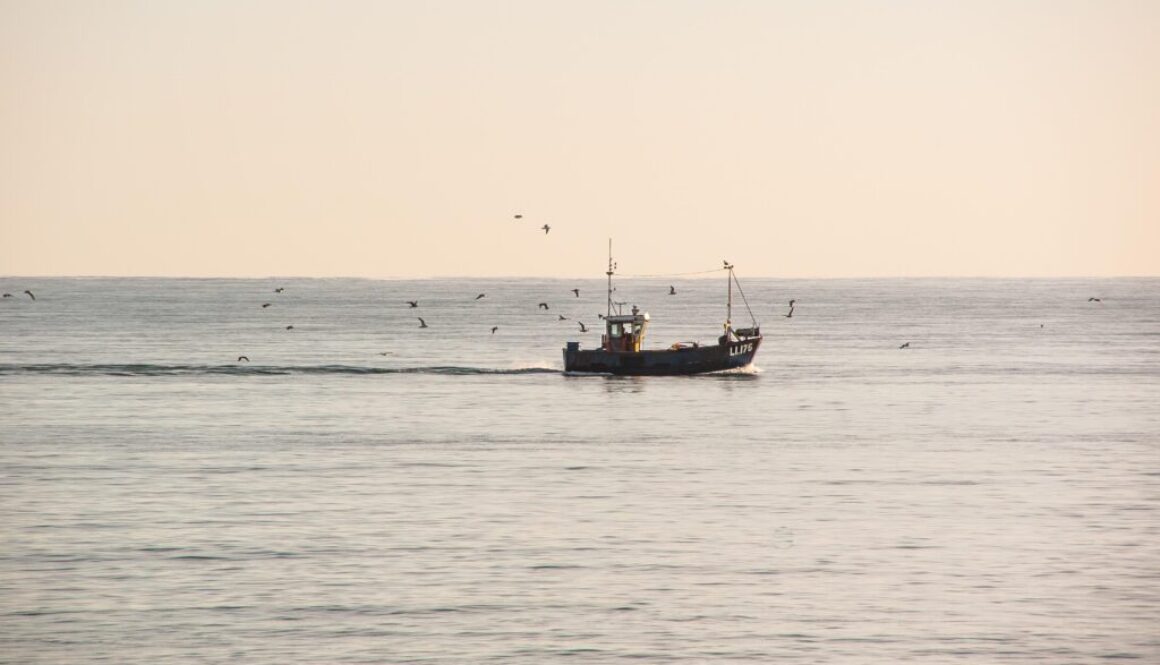
As well as recognition, small-scale coastal fleets need a differentiated approach, with space and secure access to resources and markets – not just sympathy.
The European Parliament Resolution on the Evaluation of the Common Fisheries Policy adopted in Strasbourg last week gives political support to small-scale coastal fleets (SSCF) but fails to treat SSCF as a distinct part of the fleet that requires a differentiated approach, and which should receive preferential access to inshore fishing zones and be rewarded for delivering environmental and social benefits.
Thursday 17 September 2026, the European Parliament Plenary session in Strasbourg adopted a motion for a Resolution on the Evaluation of the Common Fisheries Policy (CFP) and follow-up. The motion was proposed by 4 political groups – the EPP, the ECR, the S&D, and the Reform Group. Counter proposals from other political groups (Left, Greens and PIE) were rejected.
The Resolution calls on the Commission to submit a targeted, ambitious revision and simplification package before the end of 2026 to address severe socio-economic challenges, regulatory burdens, and geopolitical pressures. It calls for a sweeping revision of the CFP to allow for modernisation and fleet renewal; for regulatory simplification (viz à viz the control regulation); for greater flexibility in mixed fisheries to deal with unwanted by-catch, choke species, and also greater flexibility in the implementation of the landing obligation; reassessment of seabed impact by different gears, to incentivise selectivity and decarbonisation, to duly take into account socio-economic considerations alongside the best available scientific advice when setting TACs.
Whilst the resolution cites the Parliament’s previous work on Article 17 of the CFP and recent advances, its operative paragraphs say almost nothing about implementing it whilst disregarding the findings of the Commission’s evaluation of the CFP. LIFE broadly agrees with the Evaluation findings that the current shortcomings of the policy stem less from the CFP framework itself than from uneven implementation and enforcement by Member States, something that the current Resolution fails to address.
LIFE would have liked to have seen an explicit call to implement Article 17 in the spirit of the law (as laid out in Recital 33 of the CFP (Regulation 1380/2013)) by allocating quotas using transparent environmental, social and economic criteria to:
reward selective, low-impact and locally rooted fishing through additional quotas;
reserve part of fishing opportunities for SSCF;
facilitate access for young and new entrant fishers through ring fenced quotas and sectoral support;
correct historic allocations that have consolidated quota in the hands of incumbent and larger operators.
SSCF viability depends less on general recognition than on secure access to fish. Simplifying rules or modernising vessels alone will not help fishers who have insufficient quota or cannot enter quota-managed fisheries. Of note too, is that increasingly the viability of SSCF, even for those with quota, is plagued by a lack of fish in coastal waters due to stock depletion and the impacts of climate change and pollution.
The Resolution calls for socio-economic considerations to be placed alongside scientific advice, but this should not be used to set catches above precautionary scientific limits or for not addressing the need to stop overfishing. For SSCF healthy stocks are the indispensable social policy for fishing communities, combined with targeted short-term support when recovery measures are necessary.
Vulnerable ecosystems must be protected. Differentiating between bottom gears is justified, as is restricting those with greatest impact. However, weakening habitat protection generally would not serve coastal SSF that depend on functioning ecosystems.
Calls for simplification should focus on reducing unnecessary administrative burdens and achieving effective implementation. It should not mean weaker traceability, less reliable catch data, reduced control of larger operators, or lower environmental and social standards. Poor control frequently benefits operators with greater catching capacity and disadvantages compliant small-scale fishers.Therefore, the principle should be differentiated with proportionate implementation, combined with equally effective control, rather than general deregulation.
Let’s remind ourselves: SSCF provides over 50% of the seagoing jobs and land nearly 20% of the catch by value, generating vital social and economic benefits in coastal areas, anchoring livelihoods and commerce. They face existential threats which this Resolution fails to address.
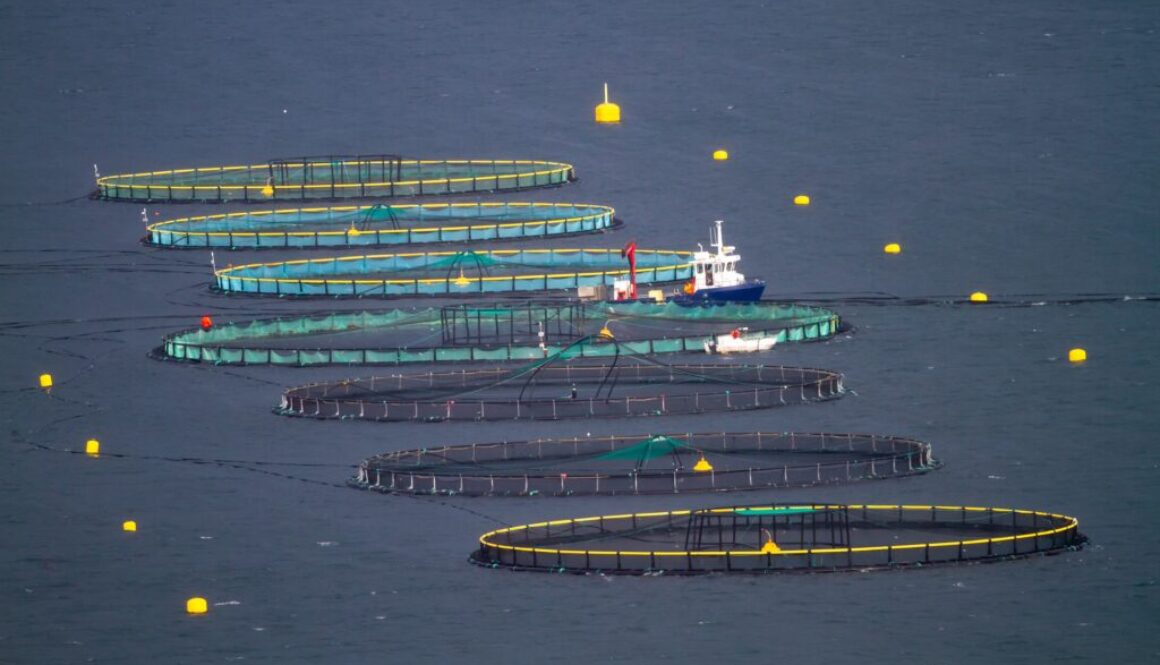
In the latest State of World Fisheries and Aquaculture Report (SOFIA 2026), the steadily growing importance of aquaculture compared to capture fisheries is highlighted. In 2024 aquaculture production of aquatic animals exceeded 100 million tonnes, compared to capture fisheries which extracted 92 million tonnes.
For LIFE, such news is to be welcomed, particularly where aquaculture can complement and be combined with small-scale low impact inshore fisheries. Non-fed aquaculture, i.e. aquaculture that uses the natural production of the sea to produce seafood in the form of bivalve molluscs and seaweeds, can also help to restore degraded marine habitats and clean polluted waters, whilst providing food and livelihoods for coastal communities.
However, there is a dark side to aquaculture. As on land for pigs, poultry and cattle, at sea for finfish the intensive industrial feedlot production is the cause of significant pollution, coastal enclosure, environmental degradation and habitat destruction to the detriment of small-scale fisheries and coastal communities. Such carnivorous aquaculture systems depend critically on fishmeal and fish oil incorporated into aquafeeds. Fishmeal is derived from a variety of sources, including from so-called “feed fish”, small-pelagic species. Reduction of such fish to fishmeal and oil can impact the food and livelihood security of coastal communities around the world, from the Baltic Sea to the coast of West Africa.
This is why LIFE has signed up to a joint statement on aquaculture presented to the 37th Session of the FAO Committee on Fisheries (COFI 37). The statement was drafted by the African Confederation of Artisanal Fisheries Organisations (CAOPA) and endorsed by 21 Civil Society and Small-scale Fishing (SSF) Organisations.
LIFE feels that joining up to such a statement is particularly important following the speech of the FAO Director General to the SSF Summit where he questioned the nutritional quality of wild fish, portraying fishing as an activity that is generally neither sustainable nor environmentally friendly, nor capable of generating sufficient income.
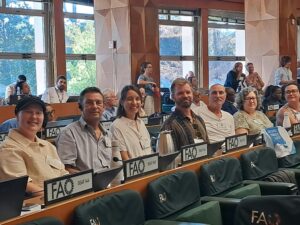
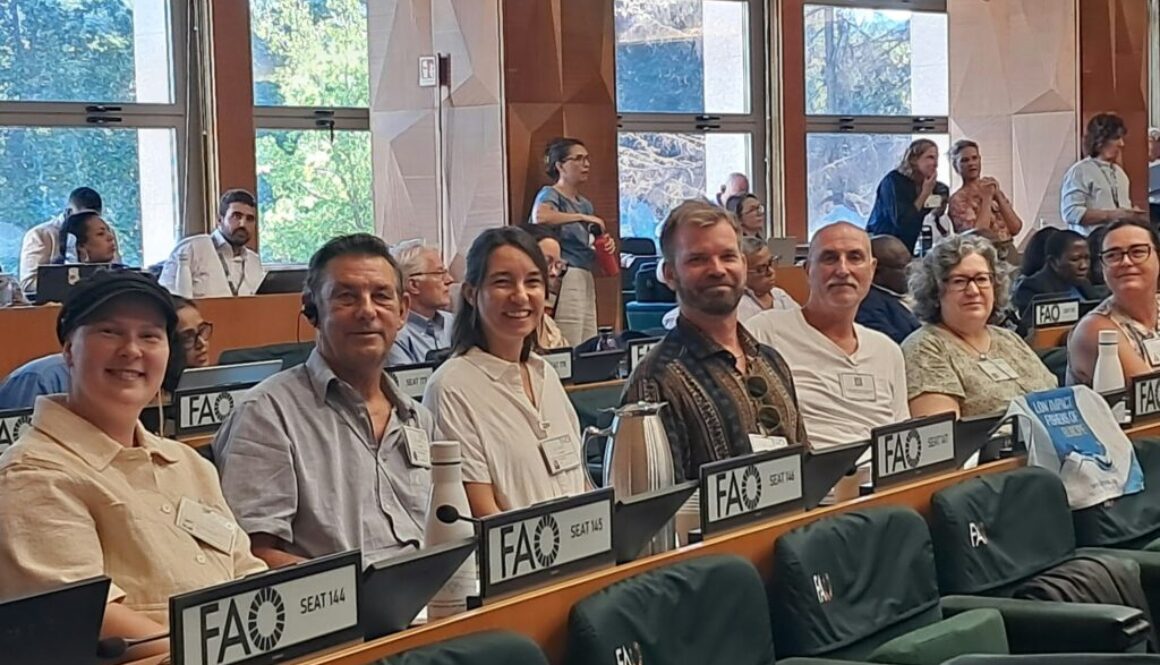
ROME, ITALY – Six fishers and LIFE’s executive secretary from the Low-Impact Fisheries of Europe (LIFE) joined small-scale fishers and global partners at FAO Headquarters from 4 to 6 September 2026 for the 3rd Small-Scale Fisheries (SSF) Summit. Held prior to the FAO Committee on Fisheries (COFI), the biennial Summit provides a rights-based platform to accelerate the implementation of the 2014 FAO Voluntary Guidelines for Securing Sustainable Small-Scale Fisheries (SSF Guidelines).
Small-scale fisheries account for 90% of employment in capture fisheries value chains, contribute at least 40% of global catches, and sustain 492 million livelihoods worldwide. Despite this vital role, small-scale fishers face persistent marginalization in marine governance.
Throughout the three-day gathering—which opened with an exclusive fisher actors forum before bringing together researchers, civil society, and government ministers—LIFE’s delegation played a central role in articulating European priorities:
Global Political Priorities: LIFE’s president Gwen Pennarun represented LIFE in Session 1.2 alongside transnational fisheries movements, demanding preferential access for SSF in the 12mile zone, fair access to quota allocations, and the need for legal plan of action for small-scale, low-impact fishers that could also foster generational renewal.
Regional Facilitation:Sandra Amezaga co-presented the summary of Day 1 opening proceedings and officially facilitated, together with Marta Cavallé, the Europe and Central Asia regional breakout session, guiding discussions on implementation strategies across European basin regions. As main outcomes there was the call for making SSF Guidelines a mandatory tool for developing but also developed countries.
Regional Plan Evaluation:MacarenaMolina delivered a critical assessment of the Regional Plan of Action for Small-Scale Fisheries (RPOA-SSF) in the Mediterranean and Black Sea, grounded in operational realities from the Cabo de Gata Marine Reserve in Almería, Spain. She highlighted pressing obstacles in its implementation—including spatial competition from offshore wind energy and mega-tourism, lack of direct sales infrastructure, sidelined co-management, and a regression in women’s representation in decision-making. Macarena called on signing Member States to honor their commitments in all the Region by securing spatial rights, enabling direct sales, restoring degraded marine habitats, greater role for women in fisheries and establishing binding co-management.
“Small-scale low-impact fishers cannot remain sidelined in policy decisions that threaten their coastal territories,” LIFE delegates emphasized. “We need concrete political commitment to turn global guidelines into concrete action and enforceable rights on the water.”
Reactivating the SSF Global Strategic Framework (SSF-GSF)
A central focus of the Summit was presenting outcomes from the reactivation process of the Global Strategic Framework in support of the SSF Guidelines (SSF-GSF). Originally established following recognition by COFI as a global partnership mechanism, the idea to renew the SSF-GSF mechanism is intended to offer small-scale fisheries actors, governments, and supporting stakeholders a collaborative platform to guide and encourage the SSF Guidelines implementation. Transnational organizations presented their vision and objectives for the reactivated framework, which will be presented and asked for at the COFI meetings.
Unifying the Global SSF Movement and the Call to Action
The Summit essentially provided a vital opportunity to strengthen alignment across the global small-scale fisheries movement. By bringing together leading transnational alliances—including the Low Impact Fishers of Europe (LIFE), the African Confederation of Professional Organizations of Artisanal Fisheries (CAOPA), the World Forum of Fisher Peoples (WFFP), and the World Forum of Fish Harvesters and Fish Workers (WFF), Union of Latin American Small-scale Fishers (ULAPA), International Treaty Council (IITC), African Women Fish Processors and Traders Network (AWFISHNET), Community-Based Fisheries Dialogue’s Advisory Group (CBFD AG) —delegates coordinated joint policy statements for COFI. This collective momentum reinforces the need for global advocacy and provides enhanced visibility to relevant initiatives such as the Call to Action, enabling signatories and small-scale fisher organizations worldwide to build a united front for tenure rights, ocean justice, and sustainable coastal livelihoods. This was nicely visualised with the delivery by CAOPA to LIFE of an award recognising the joint work on this important call.
Decades of overfishing have weakened stocks, which are now having to face adverse impacts from pollution and climate change. Despite the degradation of the Baltic Sea marine environment, there are signs that stocks can recover if allowed to do so.
Here are LIFE’s recommendations for Baltic Sea quotas for 2027, based on the need to support stock growth:
In order to support the small-scale coastal fishing sector that anchors coastal communities it is necessary for the TAC regulation to support fish stock growth. SSFC above all depends on the availability of fish of marketable size, and fish must be allowed to grow to meet prime market requirements for SSCF to be viable.
The Commission proposal for central Baltic herring does this, allowing for the third quota increase in four years while supporting an increase in the availability of larger herring and older year classes. This builds on the previous two years where the Council has set a prudent quota (0.5 Fmsy) that has delivered benefits to both the sector and the stocks.
However, adjustments to the Commission proposal are necessary. The bycatch quota for the cod stocks should be maintained at the same level as 2026 in order to minimise the risk of unintended control issues (i.e. lack of proper controls on trawling). Anecdotal evidence indicates that cod bycatch within the pelagic sector far exceeds the allowable quota but is unreported. Misreporting should be addressed as opposed to TAC reductions.
With regards to plaice, approximately 6% of the quota allocated in 2026 has been caught. The Commission’s proposed quota allocation for 2027 is therefore unrealistic, and is consequent to the scientific advice failing to reflect the current stock structure and the potential fishable biomass. The share of the used TAC has been very low, less than 15%, for many years and is declining. We therefore recommend that Article 7 of the TAC regulation is amended to allow for passive gear fishing in subdivisions 25 and 26 to be extended to a depth of 40 metres. This would allow for plaice to be exploited with more success as it escapes to deeper colder waters.
For the western spring spawning herring quota it is imperative that the Council reintroduces the directed fishing provision for the small-scale sector and rolls over the existing TAC to 2027.
With regards to Bothnian herring the Commission proposal fails to support stock growth and the level of fishing mortality would exceed the 0,5 Fmsy threshold. Therefore, we recommend a 20% reduction in the proposed TAC from 57,308 to 45,544 tonnes. Fishing in 2026 has seen a stalled recovery. The improvements that fishermen had observed last year have been eroded due to excessive levels of fishing mortality by the industrial reduction fishery for fishmeal. It is imperative to reduce fishing mortality and maintain F at levels which support stock growth and allow for the small-scale sector to have the conditions necessary for a thriving and prosperous sector.
For both central Baltic herring and sprat the stock development has been positive and is a direct consequence of the Council decisions to not pursue the maximum theoretical catch. This clearly demonstrates that stock recovery is possible despite the degradation of the Baltic Sea’s marine environment and stock growth is contingent on maintaining this prudent approach.
LIFE recommends capping quotas at 0,5 Fmsy for lower trophic level species so as to account for ecosystem dynamics and model uncertainties while allowing for stable quotas and avoidance of fishery closures. ICES ACOM state that “fishing at levels that are around 75% of FMSY or even lower will result in a minimal loss of long-term yields and produce a much larger SSB, which is de facto compatible with EBFM and in line with current legislation given the large, often unaccounted uncertainty in any assessment model.”
Recovery advice is a priority and we regret the lack of progress that has been made since the unanimous statement from Member States and the Commission at the 2026 Agrifish Council meeting. Maintaining momentum is necessary to ensure that our stocks are healthy and can support the livelihoods of small-scale fishing communities – in-line with the CFP objective to restore and maintain harvested fish populations above levels that can produce the Maximum Sustainable Yield (MSY).
Why is SSCF important
In the Baltic Sea, small-scale coastal fishing (SSCF) accounts for over 90% of the fleet and over 60% of employment (with 80% of the actual jobs) in fishing (based on Full Time Equivalent – FTE). Despite most of these jobs being of a part time nature, SSCF provides an important additional source of income for coastal communities with few alternatives. The demise of the sector and the difficult economic conditions it is experiencing threaten the viability of the coastal communities that depend on SSCF.
Over the past decade, SSCF has seen a significant erosion of its access to fishing opportunities, notably due to the demise of the cod stocks (both eastern and western) which were closed to targeted fishing in 2019. Going forward, the outlook continues to be bleak, with the continued closure of eastern and western stocks of cod to targeted fishing, with fishing opportunities allocated only for “unavoidable bycatches”. SSCF will also be hit by the closures of Western Baltic herring and “main basin salmon” in ICES subdivisions 22 to 31.
Meanwhile, industrial reduction fisheries for fishmeal continue to catch significant but unrecorded quantities of commercially important species like cod, herring and salmon as “unavoidable bycatch”, thereby undermining the recovery of these stocks.
News about fair fisheries, healthy seas and vibrant fishing communities
JOIN US on 30 September in Brussels!
Rethink Fisheries Day – Pathways for a Just Transition! The Low Impact Fishers of Europe and Seas At Risk are organising this one-day event bringing together policymakers, fishers, scientists, civil society organisations and practitioners to explore practical pathways towards fair, low-impact and ecosystem-based fisheries in Europe. Register here!
29/6-3/7 LIFE Strategy Meeting in the Netherlands
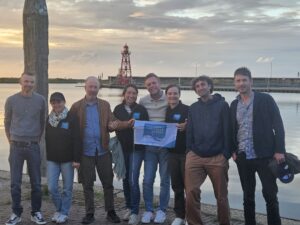
The LIFE team spent an intensive and inspiring week in the fishing village of Den Oever, in the Netherlands. With the expert guidance ofStone Soup Consulting, an international consultancy specialising in strategy, organisational development and social impact, the team reflected on LIFE’s future direction, strengthened its internal strategy and shaped its priorities for the years ahead. Bringing colleagues together in person created valuable space to exchange ideas, challenge perspectives and align around a shared vision for advancing LIFE’s mission to support its members.
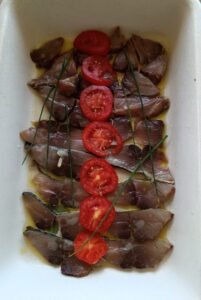
The week also included a meeting with theNorth Sea Passive Fisheries Foundation, which represents and supports the Dutch passive fishing sector, and thePot Fishing Agency, a Den Oever-based company that develops innovative fishing and processing technologies and conducts fisheries research. Discussions focused on fisheries innovation, shared ambitions and opportunities for closer collaboration to strengthen the future of small-scale and low-impact fishing.
7-8/7 EU Ocean Act Conference 2026 in Wexford, Ireland
Hosted by Ireland’s Department of Climate, Energy and the Environment, the EU Ocean Act Conference coincided with the opening days ofIreland’s Presidency of the Council of the European Union and offered an early indication of the new Presidency’s position and priorities on ocean governance. The event brought together government representatives, EU officials, policymakers, researchers and maritime stakeholders to discuss the forthcoming European Ocean Act and the wider future for EU blue economy sectors.
LIFE Member of the Board and IIMRO representative Séamus Bonner attended the event. From a small-scale fisheries perspective, Minister Dooley’s opening message that “communities have to be at the core” and recognition of our interdependence in ocean governance was welcomed. LIFE and IIMRO stress that this must translate into meaningful participation and concrete measures for small-scale fisheries, including recognition of customary fishing areas, fair access under CFP Article 17, traditional ecological knowledge, generational renewal, and transparent marine spatial planning that enables coexistence with offshore renewables and the marine protected area legislation, which was announced at the conference.
9/7 European Parliament debates the future of EU fisheries policy
The European Parliament held a plenary debate in Strasbourg on the future of the EU’s Common Fisheries Policy (CFP). MEPs questioned EU Commissioner for Fisheries and Oceans Costas Kadis about the outlook for the policy and the measures needed to support the sector.
The discussion addressed several issues of particular importance to small-scale fishers, including fleet renewal and decarbonisation, administrative simplification, generational renewal and the economic resilience of fishing communities. No resolution was adopted in July; the debate served as preparation for a parliamentary resolution expected to be put to a vote during the plenary session of 14–17 September.
The September resolution is expected to establish Parliament’s political position following the Commission’s recent evaluation of the CFP. It could help shape the debate on any subsequent reform of the CFP, its implementation and future EU funding for fisheries. Although non-binding, the resolution will provide an important indication of Parliament’s priorities for the future of EU fisheries and of the place accorded to small-scale fishers within that future.
16/07 LIFE submits its opinion on the Ocean Act
LIFE submitted its input to the public consultation launched by the European Commission to help shape the European Ocean Act, a key legislative proposal under the European Ocean Pact, set for adoption in 2026. The Ocean Act aims to strengthen ocean governance in the EU, serving as a single reference point for all economic, climate, environmental, and social targets to protect and sustainably use ocean resources.
In its response, LIFE highlighted its main priorities and key proposals. In particular, the upcoming Ocean Act offers an opportunity to establish a legislative framework that translates the Ocean Pact’s commitment to prioritising small-scale fisheries (SSF) into concrete action. LIFE’s submission therefore calls for the new legislation to include: a binding plan of action for SSF; preferential access and regenerative fishery areas; fair allocation of fishing opportunities and fostering a just transition to low-impact fishing; comanagement and inclusive governance; prioritising fishing for direct human consumption over reduction fisheries; social dimension and generational renewal and establishing a climate-adaptive Maritime Spatial Planning.
21/7 LIFE General Assembly: advocacy priorities and organisational development
The LIFE team briefed members on recent advocacy developments, and the organisation’s 2025 financial statements were presented and approved. In particular, members discussed the Fisheries Control Regulation and the challenges its implementation poses for the small-scale fisheries sector; the Ocean Act consultation and the need to strengthen protections for small-scale fisheries within the 12-nautical-mile coastal zone; and the growing threat posed by invasive species. A presentation by LIFE Project Officer Aksel Ydren on the round goby prompted participants to share experiences and examples from across Europe. The final thematic session examined the development of LIFE’s Youth Network and opportunities to strengthen the participation of younger fishers in the organisation and the wider sector. The meeting provided an important opportunity for LIFE members to exchange knowledge, guide the organisation’s advocacy and reinforce its internal governance.
23/7 LIFE visits Cooperativa San Leopoldo in Tuscany
LIFE team member Claudia Orlandini visited LIFE Italian members from Cooperativa San Leopoldo on the Tuscan coast. The visit included a tour of the cooperative’s processing unit, where small volumes of catch are transformed into high-quality, value-added products. These include tuna, grey mullet and clams preserved in oil or prepared in vacuum-packed formats. This approach enables the cooperative to make better use of lower-volume products while increasing their value and extending their shelf life.
Cooperativa San Leopoldo also works with scientific institutes to develop and test new technologies for farming innovative marine species using natural feeding systems, like plankton. The visit offered a valuable insight into how cooperation, local processing and scientific research can create new opportunities for small-scale fishing communities.
Visit to Finland
LIFE attended a study visit organised by the Finnish fishers’ association Österbottens Fiskareförbund, bringing together coastal fishers from Sweden and Finland. As part of the program, participants visited fisher Karl-Åke Wallin, Chairman of the Producer Organisation Kustfiskarna Bottenhavet, a member organisation of LIFE. During the visit, LIFE’s Aksel Ydrén presented the round goby project, sharing insights on how to tackle and utilise this invasive species and discussed cross-border collaboration between coastal fishers in Sweden and Finland.
Coming up:
3-6/9 SSF Summit in Rome, Italy – A LIFE delegation will attend the FAO Small-Scale Fisheries Summit, bringing together representatives of small-scale fishing communities and supporting organisations to exchange experiences, identify shared priorities and strengthen international cooperation. The main focus will be the implementation of the FAO’s Voluntary Guidelines for Securing Sustainable Small-Scale Fisheries in the Context of Food Security and Poverty Eradication.
19/9 Võiste, Estonia – As a Seaglow consortium member, LIFE will visit Võiste, Estonia, to attend the local fisheries fair and introduce Seaglow to the local community.
23-24/9 Bilbao, Spain – LIFE President Gwen Pennarun will participate in a workshop organised by EU-funded research project INSPIRI bringing stakeholders together to develop shared visions for a sustainable and restored Bay of Biscay and Atlantic Ocean.
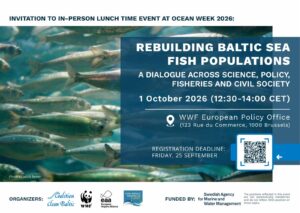
28-9/2-10 Ocean week, Brussels – A week of initiatives and events organised by Brussels Blue NGOs and other stakeholders, placing a healthy ocean at the heart of Europe’s future resilience, blue economy and environmental sustainability.
In April 2026, the Commission launched a public consultation to help shape the European Ocean Act, a key legislative proposal under the European Ocean Pact set for adoption in 2026. The Ocean Act aims to strengthen ocean governance in the EU, serving as a single reference point for all economic, climate, environmental, and social targets designed to protect and sustainably use ocean resources.
The consultation ran until 16 July 2026; LIFE contribution and related documents are available below:
News about fair fisheries, healthy seas and vibrant fishing communities
3/6 European Parliament PECH Committee: Looking Ahead to the Future of the CFP
LIFE staff attended the June meeting of the European Parliament’s Committee on Fisheries (PECH), where Commissioner Costas Kadis presented the evaluation of the Common Fisheries Policy (CFP) as part of the Structured Dialogue with Members of the European Parliament.
The meeting provided an important opportunity to take stock of the CFP’s implementation and discuss its future direction, alongside broader initiatives shaping EU fisheries and maritime policy. While calls for a revision of the CFP are gaining momentum among other interests, LIFE’s assessment coincides with the main European Commission evaluation conclusion, which is that many of the CFP’s shortcomings arise not from the policy framework itself, but from inconsistent implementation and enforcement by Member States. You can review LIFE’s complete analysis on the evaluation of the CFP here.
The Committee also examined the European Commission’s proposal for the National and Regional Partnership (NRP) Fund for the 2028–2034 programming period. The proposed regulation aims to establish the framework for EU financial support to the Common Fisheries Policy, the European Ocean Pact, and the Union’s maritime and aquaculture policies. German MEP Niclas Herbst (EPP) is the rapporteur nominated by Pech to respond to the EC proposal.
A central theme of the discussion was the sector’s energy transition, which is expected to require significant investment in the coming years. While recognising the importance of supporting this transition, LIFE’s position (see news item below) is that dedicated, ring-fenced funding for the small-scale fisheries sector is essential to ensure the segment can fully benefit from future EU funding opportunities.
LIFE will continue to closely follow these discussions and engage with EU institutions to ensure that the interests and needs of small-scale, low-impact fishers are fully reflected in the future policy and funding framework.
9/6 LIFE’s Position on the Future Fisheries Fund and the Definition of Small-Scale Fisheries
MEP Niclas Herbst (EPP), the Pech Committee Rapporteur for the renewal of EU sectoral support to the Common Fisheries Policy, the European Ocean Pact and the Union’s maritime and aquaculture policy as part of the National and Regional Partnership Fund (NRP Fund) for the period from 2028 to 2034, presented his draft report in the European Parliament.
9-11/6 LIFE attends EU Sustainable Energy Week on behalf of the Seaglow projet
LIFE attended the EU Sustainable Energy Week (EUSEW) in Brussels as a partner in the SEAGLOW project.
The event brought together policymakers, researchers, businesses, and EU-funded projects to discuss how Europe can accelerate the transition to clean energy. It also offered a valuable opportunity to connect with representatives from CINEA – the European Climate, Infrastructure and Environment Executive Agency – and exchange experiences with other initiatives working towards a more sustainable future.
This year’s central message was clear: the energy transition must be inclusive. As part of the SEAGLOW consortium and through its broader advocacy work, LIFE is committed to ensuring that small-scale fisheries are not left behind. Supporting the sector’s transition to cleaner and more energy-efficient technologies requires policies and investments that are fair, accessible, and tailored to the realities of small-scale fisheries, enabling fishers to play an active role in building a more tomorrow’s blue economy.
10/6 Advancing Offshore Wind – what role for small-scale fisheries?
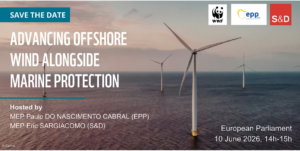
LIFE participated in the European Parliament event “Advancing Offshore Wind Alongside Marine Protection”, hosted by MEPs Paulo do Nascimento Cabral and Eric Sargiacomo. The discussion brought together policymakers, industry and public authorities to explore the future of offshore wind in European seas.
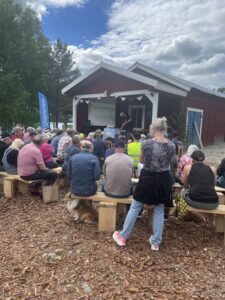
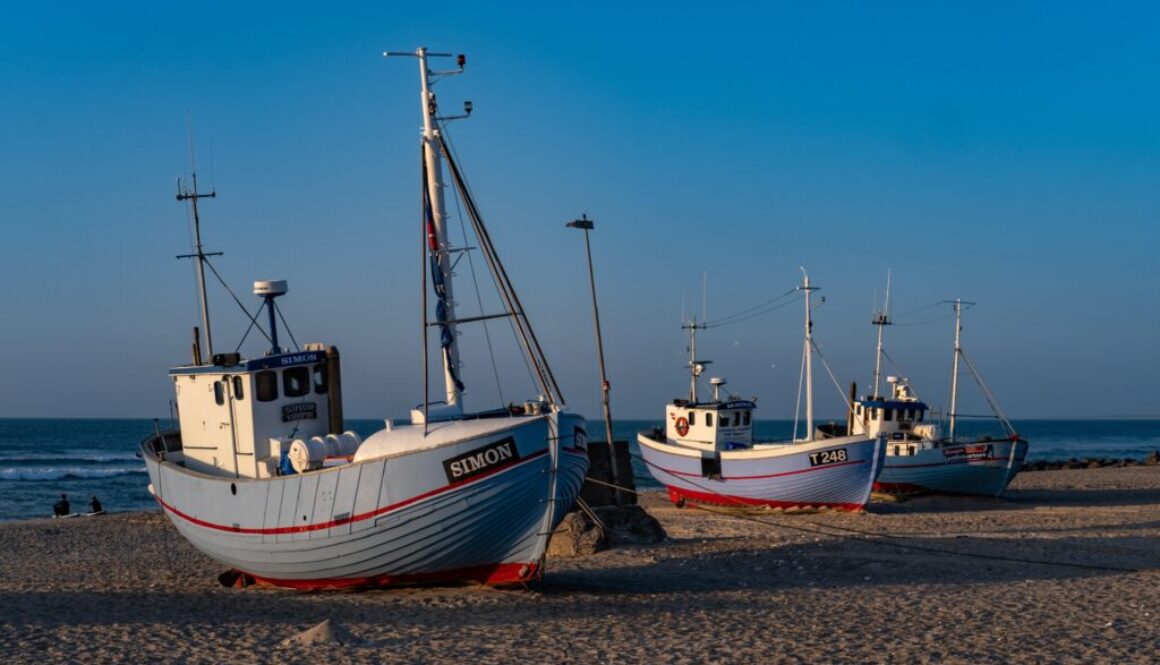
For LIFE, the debate reinforced a clear message: while Europe’s energy transition and climate resilience goals are rightly high on the political agenda, they must not come at the expense of small-scale fisheries. As offshore wind developments expand, many coastal fishers are facing reduced access to traditional fishing grounds, increasing competition for marine space, and new operational and safety challenges.
LIFE will continue working closely with fishing communities across Europe to better understand these impacts and advocate for marine spatial planning that recognises the tenure rights and essential role of small-scale fisheries. Achieving Europe’s renewable energy ambitions must go hand in hand with protecting the livelihoods, cultural heritage, and the future of the coastal communities that depend on healthy seas.
12/6 LIFE Contributes to the Stakeholders Roundtable on the European Ocean Act
To achieve the Ocean Pact’s targets, the Commission will present an Ocean Act by 2027, a single framework to facilitate the implementation of the Pact’s key objectives, while cutting red tape. It will be based on a revised Maritime Spatial Planning Directive, which will enhance cross-sectoral coordination and sea basin management.
LIFE Executive Secretary Marta Cavallé participated in a stakeholder roundtable on the forthcoming European Ocean Act, convened by the Oceano Azul Foundation, Europe Jacques Delors, and Seas At Risk. The roundtable focused on the first pillar of the European Ocean Pact—”Ocean, Climate and Planetary Health”—and brought together representatives from industry, civil society, academia, EU institutions, and Member States to develop recommendations for the future Ocean Act.
The objective was to identify common priorities and develop concrete, legally and politically feasible recommendations to help shape the forthcoming European Ocean Act. Discussions focused on aligning the revisions of the Maritime Spatial Planning and Marine Strategy Framework Directives, strengthening the effective management of Marine Protected Areas and ocean restoration, and improving coherence between ocean and other policy areas, particularly at the land-sea interface.
LIFE underscored that the European Ocean Act needs to provide the legal clarity necessary to operationalise the prioritisation of small-scale fisheries mentioned in the Ocean Pact, detailing exactly how to halt their current decline, strengthen resilience and help achieve future potential. Marta mentioned that “we cannot keep undervaluing and overlooking this sector. Instead, the ocean act should recognise it as a strategic one that should play a central role going forward, and establish a specific target for a binding Plan of Action for Small-Scale Fisheries in Europe”.
LIFE’s views is that in order to mitigate risks from larger-scale blue economy sectors, the Ocean Act must protect coastal communities from significant environmental and socio-economic harm. It should establish regenerative areas, granting preferential access to small-scale, low-impact fishers and activities within the 12 miles zone. These areas should be managed through co-management schemes to ensure equitable governance and sustainability.
13/6 and 27/6 Promoting underutilised fish species in Sweden
LIFE took part in two events in Sweden highlighting the potential of underutilised fish species to support sustainable food systems, healthy aquatic ecosystems, and viable inland fisheries. On 13 June, LIFE staff attended the Fish Festival in Ede, outside Kälarne, which attracted over 400 visitors to taste underutilised freshwater species such as roach and bream. The festival grew out of a local fishery management project aimed at reducing algae blooms in Lake Hemsjön by harvesting these species. Rather than discarding the catch, local fishers collaborate with food experts to transform them into innovative products, including fermented roach, demonstrating how so-called “trash fish” can become valuable and sustainable food resources.
Later in the month, on 27 June, LIFE participated in the “Forgotten Fish” tasting event at Smaklabbet in Väderstad. Children and teenagers took part in a hands-on cooking workshop using round goby, an invasive species caught and supplied by LIFE Board Member Bengt Larsson, showcasing another example of how overlooked fish can be brought into home kitchens. The event also featured the “Forgotten Fish” panel discussion, organised by Kålrotsakademien and chef Stefan Eriksson, where LIFE’s Aksel Ydrén joined chefs, fishers, and food experts to discuss taste, sustainability, and the role of underutilised species in the future of food.
19/6 Press briefing: EU fisheries at a crossroads
Ahead of the AGRIFISH Council of Ministers meeting, LIFE Executive Secretary Marta Cavallé took part in a press briefing on the future of EU fisheries policy, organised jointly by a group of NGOs for sector journalists.
The briefing came at a pivotal moment for European fisheries governance, just following the European Commission’s announcement that it is preparing a fisheries “Omnibus” package to simplify existing legislation. With the upcoming Ocean Act, the Fisheries and Aquaculture Vision 2040, the next Multiannual Financial Framework, and the evaluation of the Common Fisheries Policy (CFP) all on the table, the coming months will shape the future of Europe’s fisheries for years to come.
LIFE highlighted that the main shortcomings of the CFP lie not in the policy itself, but in its inadequate implementation and enforcement across Member States, which have failed to uphold the spirit of the legislation while favouring large-scale interests. While some stakeholders are calling for a revision of the CFP, LIFE stressed that priority should be given to fully implementing the existing framework, strengthening accountability, and delivering on its objectives before reopening the legislation. LIFE also emphasised that an ambitious Ocean Act, with binding measures to support Small-Scale Fisheries through the fair allocation of fishing opportunities and access to marine space, would deliver more immediate and tangible results.
These issues featured prominently in the subsequent AGRIFISH Council of Ministers (22–23/6), where EU fisheries ministers discussed the state of the CFP and launched the annual process for setting fishing opportunities for 2027. While the Commission reported continued progress towards sustainable fisheries, Ministers acknowledged ongoing challenges, including climate change and the need to ensure the long-term resilience and profitability of the sector. Ministers also reviewed the evaluation of the CFP and progress on the proposed 2028–2034 EU fisheries funding framework, focusing discussions on ensuring future funding supports key priorities such as decarbonisation, fisheries control, and fisheries management.
23/6 Commission seeks feedback on fisheries multiannual plans (MAPs) – LIFE position
The European Commission plans to review four of its Multiannual Plans (MAPs) – for the Baltic Sea, the North Sea, the Western Waters and the Western Mediterranean. It has issued a call for evidence (now closed) to obtain views and gather scientific, ecosystem and economic data on fisheries MAPs from stakeholders.
The MAPs provide a potentially powerful tool for restoring fish stocks and marine ecosystem health, for achieving diverse, sustainable and resilient fisheries, underpinning coastal communities’ prosperity.
LIFE is highly critical of the way that Maximum Sustainable Yield (MSY) has been applied, and calls for reforming the MAPs, with MSY being applied to reduce fishing intensity for all commercial species, while accounting for stock structure and ecosystem interactions.
LIFE also calls for MAPs to build in positive incentives that reward selective and low impact fishing, to establish fisheries regenerative areas within the 12 mile zone under co-management, and to strengthen community led governance. LIFE also urges the EC and Member States to include action plans for small-scale coastal fishing.
7-9 Wexford, Ireland – Ireland is hosting will host the EU Ocean Act Conference at which delegates will meet and discuss the draft European Ocean Act, a forthcoming EU law, planned for 2027, designed to unify ocean-related policies, strengthen maritime spatial planning, and promote sustainable use of marine resources. LIFE members from Ireland are going to attend on behalf of the Platform.
8/7 Online – Meeting of the Ocean Board to inform about the state of the Ocean Pact Dashboard and Ocean Report
News about fair fisheries, healthy seas and vibrant fishing communities
CFP Evaluation Report: Europe Must Do Better for Small-Scale Fishers
The analysis of the evaluation of the CFP through the lens of the Low Impact Fishers of Europe (LIFE) reveals a general shared acknowledgement that the primary challenge is not the rules themselves but mostly inconsistent implementation and enforcement across Member States, but it disagrees on the positive trend presented in the evaluation on the sustainability of stocks, which LIFE claims is not borne out by reality.
A number of challenges persist for small-scale fisheries. The evaluation highlights shortcomings in the delivery of the CFP’s social and economic objectives, including securing a fair standard of living for fishers. Key provisions related to access to space, allocation of fishing opportunities and stakeholder participation remain insufficiently implemented. Although the evaluation does not include a dedicated assessment of Article 17, it confirms that small-scale fishers still face significant barriers to accessing fishing opportunities. Regarding Articles 5 and 20, it found no cases where the 12-nautical-mile zone is formally reserved for small-scale coastal fisheries. The evaluation also highlights that structural imbalances and problems of representativeness persist in the Advisory Councils.
LIFE and the evaluation agree that the Landing Obligation and fleet capacity measures have largely failed due to poor implementation, weak enforcement, and numerous exemptions, with little uptake of more selective fishing practices. This has contributed to fisheries mismanagement and reduced resilience. However, LIFE considers it a significant omission that the evaluation fails to link the shortcomings of the Landing Obligation to the inadequate implementation of Article 17.
As discussions begin on the future of EU fisheries policy, LIFE calls for stronger accountability, better implementation and enforcement of existing rules, and greater recognition and a binding mandate for Member States to support the role that small-scale, low-impact fisheries play in supporting sustainable food systems and resilient coastal communities through the Ocean Act. LIFE PR is available here, and position paper here.
4/5 Can we save the eel by eating it? Gastronomy and heritage in focus
LIFE participated in an interdisciplinary research seminar hosted by the University of Gothenburg at Talldungens Gårdshotell in Brösarp, Sweden. The workshop gathered researchers, small-scale fishers, chefs, and environmental organisations to explore how local gastronomy and culinary heritage can play a role in saving the critically endangered European eel.
The day featured open discussions on sustainability and coastal identity, alongside a presentation by eel scientist Willem Dekker. For LIFE, the event was a valuable opportunity to highlight the realities of the small-scale sector, including gear development to selectively fish round goby and avoid eel bycatch. The seminar concluded with group sessions to lay the groundwork for future joint research and practical collaborations.
6/5 LIFE at the European Parliament: Competitiveness and the Future of Small-Scale Fisheries
LIFE was represented by Marta Cavallé, Executive Secretary, who took part in the second part of the hearing, dedicated to boosting the competitiveness of the fisheries and aquaculture sectors.
During the presentation, Marta highlighted the need for moving from decline to a thriving, fair and sustainable small-scale fishing sector across Europe. For that, she highlighted the 6 main factors affecting competitiveness of the small-scale fishing fleet (environmental factors, lack of access to resources, spatial squeeze, lack of access to markets, lack of dedicated support, barriers to enter the profession) and what LIFE suggests to counter the negative trend. She also underlined the need for a dedicated Action Plan for Small-Scale Fisheries within the forthcoming European Ocean Act, calling for a change of course that places small-scale, low-impact fishers at the centre of Ocean Policy.
The hearing provided an important opportunity to bring the voice of small-scale fishers to the European Parliament and contribute to ongoing discussions on the future competitiveness of the sector.
14/5 Highlights from the LIFE Board of Directors Meeting
The LIFE Board of Directors met to discuss the latest policy developments.
LIFE reported on its participation in the first meeting of the European Ocean Board and in a European Parliament Fisheries Committee hearing on competitiveness and simplification, reflecting growing recognition of the organisation and greater visibility for the small-scale sector at EU level.
The Board reviewed the recently published evaluation of the Common Fisheries Policy (CFP), which confirms that many socio-economic objectives for small-scale fisheries remain unmet. Members stressed the need for stronger implementation, accountability and fairer access to resources.
Discussions on the new Fisheries Control Regulation highlighted concerns that several requirements are not adapted to the realities of small-scale fishing operations, particularly regarding reporting and weighing requirements before landing and compliance costs.
Members also exchanged updates on fuel subsidy schemes across Europe, noting significant disparities and calling for fairer support mechanisms that better reflect the needs of small-scale fishers.
21/5 European Parliament Plenary adopts Resolution on the Baltic Sea Multi-Annual Plan (MAP)
The own initiative report (INI) on the Baltic MAP, initiated by the Swedish Green MEP, Isabella Lövin, was adopted by the European Parliament. The MAP, in place since 2016, was meant to support successful fish stock management but has failed to deliver on its core objectives. The report contains 59 measures that are aimed at improving the current management system moving forward. These include a ban on industrial trawling for fishmeal when stocks are in bad shape, adding more precaution to the scientific advice process so as to ensure there are more fish in the sea with higher biomass thresholds in place, as well as integrating the requirements under the Marine Strategy Framework Directive to ensure that fish populations have a healthy age and size distribution.
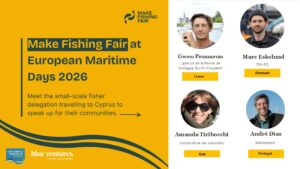
20-23/5 European Maritime Day 2026: Small-Scale Fishers Engage in Shaping Future EU Fisheries Policy
In discussions on the future Multiannual Financial Framework (MFF), the delegation called for a dedicated, ring-fenced budget for small-scale fisheries and for funding instruments that are accessible, proportionate and capable of supporting the resilience, innovation and long-term viability of coastal fishing communities.
Debates on the European Ocean Act highlighted the need to secure fair access to resources and maritime space for small-scale fishers, with the 12-mile zone being reserved for small-scale, low-impact operations. Additionally, strengthening co-management approaches should be a central pillar of the sustainable blue economy. The delegation also advocated for the inclusion of a European Plan of Action for Small-Scale Fisheries within the Ocean Act. In this context, they also engaged with and supported Cypriot fishers in their call for a National Plan of Action for Small-Scale Fisheries, demonstrating the alignment to act at European and national level.
The delegation also engaged in exchanges on the Roadmap for the Energy Transition of EU Fisheries and Aquaculture, underlining that decarbonisation objectives must be accompanied by adequate financial support, appropriate technologies and practical solutions adapted to the realities of small-scale fleets.
A consistent message throughout the event was that the success of these policy initiatives will depend on the meaningful participation of small-scale fishers in both their design and implementation.
20/5 A Positive Signal for Small-Scale Fishers in Maritime Spatial Planning
The Resolution calls for a more balanced and inclusive approach to maritime spatial planning, with stronger stakeholder participation, better assessment of socio-economic impacts, and greater recognition of fisheries and aquaculture as strategic sectors for food security and coastal resilience. It also highlights the importance of safeguarding access to fishing grounds via “preferential access within the 12 nautical mile zone for small-scale fisheries, low-impact activities and conservation projects”, and ensuring that small-scale fishers are meaningfully involved in planning processes.
26/5 – Commission Opens Consultation on Fisheries Management Plans
The European Commission has launched a call for evidence on the EU’s Multiannual Fisheries Management Plans (MAPs), seeking feedback from stakeholders on provisions that have proven difficult to implement and their impacts on fisheries management and the sector’s viability. The review forms part of the Commission’s broader efforts to improve and simplify fisheries management while maintaining the objectives of the Common Fisheries Policy.
25–26/5 Visit to West Coast Fisher with Chefs, Exploring Future Opportunities
Bobo Johansson owner of Bobos Fisk @LIFE
LIFE visited Swedish west coast fisher Bobo Johansson owner of Bobos Fisk, together with chefs from Seafood Gastro (1 Michelin star, Grand Hôtel Stockholm). Bobos Fisk specialises in shellfish fisheries using passive gears and has previously participated in trials with shrimp pots as an alternative to bottom trawling.
The visit focused on exploring new seafood opportunities and strengthening cooperation between fishers and chefs. Gullmarsfjorden is set to become Sweden’s first marine protected area where bottom trawling will be fully phased out from 2027, creating unique opportunities for the development of selective, low-impact fisheries and new value chains based on high-quality seafood products.
28-29/5 ICES advice published
The scientific advice on fishing opportunities for the Baltic Sea in 2027 was published by ICES and the rollercoaster is set to continue next year with stock growth and recovery once again left off the agenda.
At last year’s October Council (p.13) a clear commitment was made by the EU to reform the scientific approach to management to ensure that the advice would support healthy fish stocks. It is regrettable that this has yet to be delivered.
LIFE is critical to the current approach to scientific advice, as it does not deliver healthy stocks or sustainable catches. For the coming year, the output from ICES states that quotas for the Central and Bothnian herring stocks can be more than doubled, even though the biomass levels are below threshold values. The cod fishery will likely continue to be closed, and the salmon stocks are still assessed as being in poor shape.
Coming up:
9-11/6 Brussels – EU Sustainable Energy Week, the largest annual event in Europe dedicated to promoting secure, clean and efficient energy.
13/6 Jämtland, Sweden – Fish Festival – Promoting Sustainable Freshwater Fisheries at Lilla Ede Gård in Kälarne, central Sweden. The festival brings together fishers, food producers, chefs and the public to explore how underutilised freshwater species can contribute to more sustainable food systems.
15-6/7 Inter-AC Meeting and Dialogue with Stakeholders
In the press
The Commission published its annual communication on the state of EU fisheries, taking stock of progress towards sustainable fishing and setting the course for the upcoming cycle of fishing opportunities for 2027.
LIFE welcomes key elements of the draft report presented by PECH Rapporteur Niclas Herbst on the future financing of EU fisheries and aquaculture under the 2028–2034 Multiannual Financial Framework. In particular, the proposal to ring-fence funding for the sector and preserve a dedicated fisheries and aquaculture funding stream is an important step towards ensuring that support reaches fishing communities.
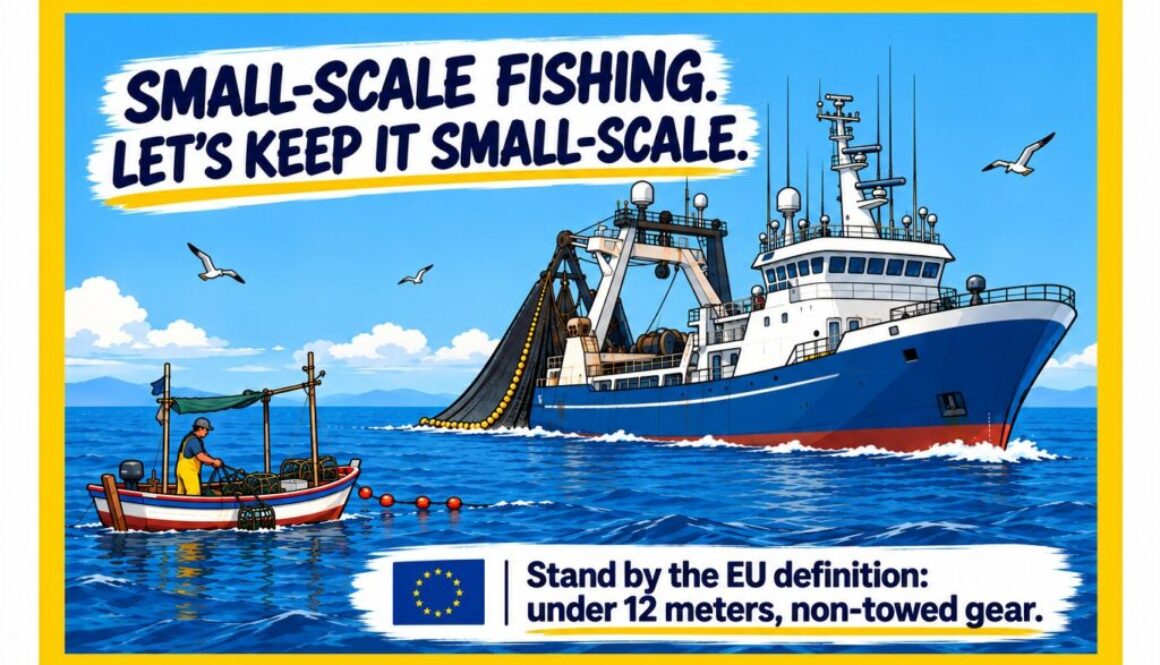
However, LIFE is concerned that the proposed revision of the definition of small-scale coastal fisheries could create significant loopholes, allowing larger and more environmentally impactful vessels to qualify for support intended for genuinely small-scale operators. To ensure that funding delivers its intended social, economic and environmental benefits, LIFE calls for maintaining the current EMFAF definition of small-scale fisheries and for establishing a dedicated support system tailored to the realities of the sector.
The European Commission’s evaluation of the Common Fisheries Policy (CFP) echoes concerns raised by the Low Impact Fishers of Europe (LIFE) that its core goals are not being adequately delivered. Despite progress in some areas, both assessments highlight continuing shortcomings in achieving long-term sustainability and securing a fair standard of living, particularly for small-scale, low-impact fishers.
Importantly, both the Commission and LIFE conclude that these shortcomings stem less from the CFP framework itself than from uneven implementation and enforcement by Member States. This analysis examines where the two perspectives align, where they differ, and what these findings mean for the future of European fisheries management.