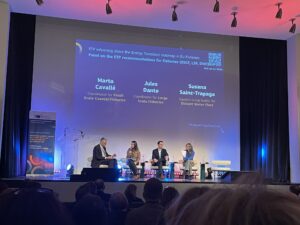
Il- Energy Transition Partnership (ETP) of the European Commission has published its joint and sector-specific recommendations, developed to inform the forthcoming Energy Transition Roadmap for fisheries and aquaculture towards climate neutrality by 2050.
The recommendations were prepared through the work of the ETP Support Groups, which brought together fishers, stakeholder organisations, researchers and other experts to identify key priorities and challenges for the sector.
Il- Small-Scale Fisheries (SSF) Working Group played an important role in this process. Its recommendations reflect the collective input of small-scale fishers and LIFE members from across Europe, who contributed their experience, knowledge and perspectives to the discussions. Their engagement helped ensure that the realities of small-scale, low-impact fisheries were clearly articulated, including the importance of healthy fish stocks, fair access to resources, differentiated approaches to the energy transition and the need for tailored public support.
LIFE would like to thank all small-scale fishers and member organisations who dedicated time and effort to this process, as well as Marta Cavallé, LIFE Executive Secretary, who coordinated the work of the Small-Scale Fisheries Working Group.
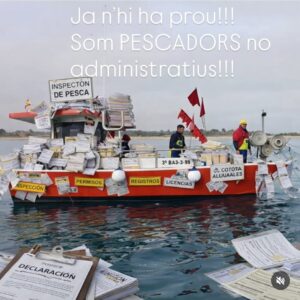
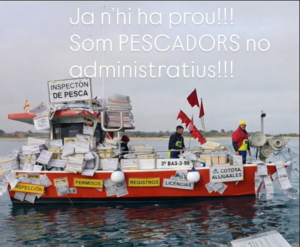
On January 10th, two years after its publication, the European Union Fisheries Control Regulation came into force for vessels over 12 metres. Small-scale fishing vessels under 12 metres still have two years before the regulation is implemented, but most of them are joined the protests and general strike called yesterday by the Spanish inshore fishing sector, due to their concern about some of the measures that will come into force in 2028.
The small-scale fishing sector does not deny the need for effective control, but its current discontent is due to the excessive bureaucracy and high administrative burden that the regulation entails and which, at the same time, may pose a high risk to maritime safety. When the LIFE Control Regulation was published in 2024, LIFE carried out a brief analysis of it.
Currently, fishers claim that those who drafted and approved the control regulation are unaware of the reality of the small-scale fishing sector and what its requirements will actually mean in their day-to-day work. Specifically, they are opposed to:
– Notification of 4 hours’ notice before entering port: For vessels that fish close to the coast and make trips that normally last less than 12 or even 8 hours, this timing is difficult to guess, would probably coincide during fishing operations and does not add any useful information to the control since -at least in Spain- every fisheries modality has its own schedule to leave and return to port.
– Fish will have to be weighed on board with a margin of error of less than 10%: It is impossible to untangle, sort and weigh the product on board before entering port, in small vessels, sometimes without any crew, while manoeuvring and with the vessel in motion, and this seriously affects maritime safety. While it is important to have an accurate catch declaration, this can wait until arrival on land, where all the necessary equipment and conditions are in place to do so with all the necessary guarantees and accuracy.
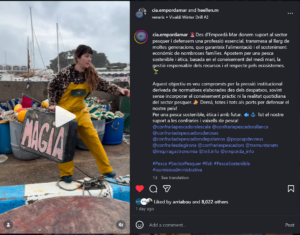
LIFE Spanish Members, including Empordà Mar, made their voice heard on the ground and on social media
On the other hand, the lack of information and uncertainty that Member States are providing on how the digitisation system will work, from the electronic logbook on board to the new obligation to carry a VMS system on small-scale vessels, is a cause for concern for the sector, which demands that they be taken into account in its design. If implemented correctly, digitisation could revolutionise data collection and use, empowering fishers on the one hand and improving their visibility and increasing the reliability of scientific advice on the other. If not implemented correctly, with tracking and data collection systems that have not been sufficiently tested, are costly and have not been designed with the involvement of fishers from the start, it could wreak havoc and further increase the bureaucratic burden, as we have seen with the disastrous implementation of the iVMS tracking system in the United Kingdom. The secret to successful digitisation is multifunctionality: vessel monitoring and electronic catch reporting systems must be useful to both authorities and fishers, otherwise they simply will not work.
Pescadores españoles de pequeña escala se suma a las protestas contra determinadas disposiciones del Reglamento de Control de la Pesca
Foto credit @Es corall
El pasado 10 de enero, 2 años después de su publicación, entró en vigor el Reglamento de Control de la actividad pesquera de la Union europea para los buques de más de 12 metros. A la pesca de pequeña escala, de menos de 12 metros, aún le quedan 2 años para su implementación, pero la mayoría de ellos se sumaron ayer a las protestas y a la parada general del sector de pesca de bajura español, preocupados por algunas de las medidas que les vendrán en 2028.
El sector artesanal no niega la necesidad de un control efectivo, pero su malestar actual se debe a la excesiva burocratización y elevada carga administrativa que el reglamento supone y que -a la vez- puede suponer un alto riesgo a la seguridad marítima. Cuando se publicó el Reglamento Control en 2024, LIFE ya hizo un breve análisis del mismo.
Actualmente, los pescadores aseguran que quien ha redactado y aprobado el reglamento de control no conoce la realidad del sector pesquero de pequeña escala y lo que sus requerimientos supondrán realmente en su día a día. Concretamente, se manifiestan en contra de:
– Notificación con 4 horas de antelación antes de entrar en puerto: Para los buques que faenan cerca de la costa y realizan salidas que normalmente duran menos de 12 o incluso 8 horas, este plazo es difícil de calcular, probablemente coincidiría con las operaciones de pesca y no aporta ninguna información útil al control, ya que, al menos en España, cada modalidad pesquera tiene su propio horario de salida y regreso al puerto.
– El pescado deba ser pesado a bordo y con un margen de error de menos del 10%. Conseguir desenmallar, clasificar y pesar el producto a bordo antes de entrar a puerto, en embarcaciones pequeñas, a veces sin ningún tripulante, mientras se maniobra y el barco está en movimiento es algo imposible y que afecta gravemente a la seguridad marítima. Si bien es importante tener la declaración ajustada de capturas, ello puede esperar a su llegada en tierra donde hay todo el material y condiciones para poderlo hacer, con todas las garantías y exactitud necesarias.
Los miembros españoles de LIFE, incluido Empordà Mar, hicieron oír su voz tanto sobre el terreno como en las redes sociales.
Por otro lado, la escasa información e incertidumbre que los estados miembros están dando a como avanzará el sistema de digitalización, del diario electrónico a bordo y la nueva obligación de llevar un sistema de VMS de las embarcaciones de pequeña escala preocupan al sector, que demanda que se les tenga en cuenta en su diseño. La digitalización, si se implementa correctamente, podría revolucionar la recopilación y el uso de datos, empoderando a los pescadores, por un lado, mejorando su visibilidad y aumentando la fiabilidad del asesoramiento científico, por otro. Si no se implementa correctamente, con sistemas de seguimiento y recopilación de datos sin suficiente testeo, elevados costes y sin la participación de los pescadores en su diseño desde el inicio, podría causar estragos y aumentar aún más la carga burocrática, como hemos visto con la desastrosa implantación del sistema de seguimiento iVMS en el Reino Unido. El secreto del éxito de la digitalización es la multifuncionalidad: los sistemas de seguimiento de buques y de notificación electrónica de capturas deben ser útiles tanto para las autoridades como para los pescadores, de lo contrario, simplemente no funcionarán.
Additional information on the general strike in the press/Información adicional sobre la huelga general en la prensa
LIFE, the Prud’homie des pêcheurs de La Ciotat, the CDPMEM du Var, and the Plateforme de la petite pêche artisanale française jointly address Catherine Chabaud, French Minister of the Sea and Fisheries, calling for a fairer share of the newly increased bluefin tuna quota.
ICCAT’s latest assessments confirm a full recovery of Mediterranean bluefin tuna, leading to an expected 16% quota rise for France in 2026–2028 — more than 1,100 additional tonnes. We welcome this success, but stress that relying solely on historical catches to allocate quotas continues to exclude most small-scale, low-impact fishers.
We urge the Minister to adjust allocation rules so that the small-scale fleet — vital to local communities and marine stewardship — can finally access this emblematic resource. Even a limited rebalancing would strengthen small-scale fisheries without harming larger operators, while supporting traditional management systems such as the prud’homies.
As EU fisheries ministers prepare for the pivotal December Council meeting, we are issuing a united call with recreational fishers and environmental NGOs for a fundamental shift in how scientific advice on fishing opportunities is requested and used. In a joint letter to Commissioner Kadis, we urge the European Commission to ensure that future fishing limits and the science underpinning them fully align with the EU’s legal obligations and its broader ambition to deliver a healthy, resilient and productive ocean under the European Ocean Pact.
Across Europe’s sea basins, once-abundant commercial fish populations—from mackerel and cod to haddock and Baltic species—are showing alarming declines. Reversing these trends requires a renewed scientific advisory framework that explicitly prioritises stock recovery, precaution, ecosystem health, and the achievement of Good Environmental Status.The renewal of the Framework Partnership Agreement and the Specific Grant Agreement between the European Commission and the International Council for the Exploration of the Sea (ICES), which is now imminent, is a decisive opportunity. We call on the Commission to update these agreements so that EU advice requests to ICES clearly seek rebuilding-focused, precautionary, ecosystem-based guidance, to champion lower fishing limits for 2026 where needed and to involve stakeholders more transparently in shaping future advisory processes.
By embedding recovery and ocean health into both policy and scientific advice, the Commission can steer EU fisheries management toward long-term sustainability, thriving coastal communities, and resilient marine ecosystems. We stand ready to support this transition and have requested a dialogue with the Commissioner to discuss concrete next steps.
Restoring Europe’s fish stocks and the ecosystems that sustain them must be an urgent political priority. For LIFE, this begins with fisheries management that draws only on the best available science.
The Common Fisheries Policy (CFP) clearly states in Article 2.2 that fish populations must be restored and maintained above levels capable of producing maximum sustainable yield (MSY). Yet EU fisheries management has persistently failed to achieve this. A central reason lies in how ICES scientific advice is generated, interpreted, and applied. Biological reference points such as Btrigger and Blim—intended as warning thresholds—have instead been used as management targets, keeping many stocks dangerously close to their lowest viable levels. At the same time, ICES assessments often overlook key ecological realities, including predator–prey interactions, natural mortality changes, changing environmental conditions, and the natural age and size structure of fish populations.
The results are now visible across European waters. Years of overly optimistic biomass estimates and quotas set above precautionary levels have contributed to repeated stock collapses and long-term declines—from pollack, to Baltic cod, herring and sprat, to name a few. These failures point to a systemic issue: scientific advice is constrained by restricted modelling parameters, limited ecosystem context, and governance structures that do not incentivise stock recovery.
To reverse these trends, the EU must scrutinise how ICES advice is produced, mandate more ecosystem-based assessments, and ensure that the design and application of Multiannual Management Plans (MAPs) support—not hinder—stock rebuilding. The unique way in which the EU requests and ICES operationalise MSY urgently requires reform. Without clearer, recovery-oriented guidance, fish stocks will remain trapped in cycles of low biomass, and fishing viability—particularly for small-scale coastal fleets—will continue to be seriously affected.
Reforming the EU–ICES Agreement is the most cost-effective step toward restoring abundance. Science must be empowered to deliver advice that enables stocks to grow, expands fishing opportunities, and rebuilds resilience for coastal communities.
LIFE stands ready to contribute to this reform process and has recently engaged the European Commission through an exchange of letters shared below. By improving the quality and use of ICES science, strengthening decision-making, and integrating the wisdom of fishers, the EU can finally deliver healthy seas, thriving fish stocks, and sustainable coastal livelihoods.
News about fair fisheries, healthy seas and vibrant fishing communities
LIFE Elects its New Board of Directors
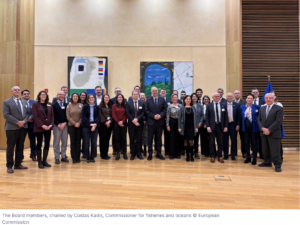
LIFE is pleased to announce the election of its new Board of Directors, bringing together a diverse group of representatives from across Europe’s main sea basins. This renewed leadership reflects LIFE’s commitment to ensuring that the voices and perspectives of small-scale fishers are heard from the Baltic and North Sea to the Mediterranean and Black Sea. The newly elected Board will guide LIFE’s strategic direction and strengthen its role in advocating for sustainable and fair fisheries.
New BOD composition:
Mediterranean and Black Sea Region:
Federico Gelmi, Associazione Pescatori di Pantelleria (Italy)
Kazimir Bogović, Udruga malih priobalnih ribara Jadrana (Croatia)
Macarena Molina, Pescartes (Spain)
Baltic and North Sea Region:
Bengt Larsson, SYEF (Sweden)
Kasia Stepanowska, Darłowska Group of Fish Producers and Shipowners (Poland)
Erik Meyer, Fischereischutzverband Schleswig-Holstein (Germany)
Atlantic Region:
Gwen Pennarun, Brittany Handliners Association (France)
South Atlantic: Sandra Amezaga, Mulleres Salgadas (Spain) / David Pavon, Cofradia el Hierro (Spain)
With a refreshed Board, LIFE looks forward to continuing its mission to empower small-scale fishers and champion sustainable, low-impact fisheries across Europe.
24/11 LIFE Calls for an EU Plan of Action for Small-Scale Fisheries at Implementation Dialogue with Commissioner Kadis
LIFE took part in the Implementation Dialogue on Small-Scale and Coastal Fisheries, the second in a series of such stakeholder dialogues, organised by the European Commission and hosted by Commissioner for Fisheries and Oceans Costas Kadis. Representing LIFE, Marta Cavallé, Executive Secretary, delivered a strong message on behalf of Europe’s small-scale, low-impact fishers, calling for urgent and concrete action to secure their future.
In her intervention, Marta stressed that despite decades of political recognition of small-scale fisheries (SSF), this has yet to translate into meaningful improvements. She highlighted the outcomes of the recent Make Fishing FairForum, where 43 fishers from 16 countries warned that Europe has reached a tipping point of decline and cannot afford further delay in restoring fish stocks, safeguarding coastal livelihoods and ensuring fair access to resources.
LIFE urged the EU to adopt a Plan of Action for Small-Scale Fisheries in Europe by 2026, rooted in the FAO SSF Guidelines and based on a differentiated approach between small-scale and larger-scale fisheries. LIFE also submitted detailed written responses to Commission’s questions outlining barriers for generational renewal, barriers faced by SSF in accessing EU funding, the need for ring-fenced budgets, tailored capacity-building, recognition of SSF Producer Organisations, and concrete measures to ensure that administrative and regulatory systems are truly fit for purpose. Additional recommendations addressed data gaps, fisher-led technologies, co-management, climate adaptation, and the training needs required for a modern, resilient SSF workforce.
LIFE welcomed the Commissioner’s commitment to continuing this dialogue, but emphasised that, within the Common Fisheries Policy (CFP), Europe already has the tools to act. By adopting a Plan of Action with a binding timeline and embedding it in the upcoming Ocean Act, the EU can ensure that the SSF can play its part in restoring its seas, promoting responsible fisheries, and ensuring that coastal communities thrive.
As Marta concluded: “It is time to recognise small-scale fishers not as the past, but as part of the future of sustainable European fisheries. Together, we can make fishing fair.”
17/11 LIFE Unites Small-Scale Fishers in Brussels for the Make Fishing Fair Forum
Group Photo @Matt Judge/Blue Ventures
LIFE, in tight cooperation with Blue Ventures, brought together 43 small-scale fishers from 16 European countries in Brussels as part of the Make Fishing Fair Forum.
Fishers in the room reiterated what LIFE has long warned: after years of policies favouring industrial fleets, Europe’s inshore fish stocks are collapsing and small-scale fishers are being pushed to the brink. The fishers at the Forum made a unified call for an EU Plan of Action for Small-Scale Fishing by 2026, aligned with the FAO SSF Guidelines, to rebuild stocks, secure access in coastal waters, ensure fair allocation, strengthen co-management and support new entrants. LIFE asserts that the Plan, part of a wider Make Fishing Fair Roadmap, should be included in the Ocean Act with a binding timeline for Institutions and Member States.
Commissioner Kadis, who addressed fishers and stakeholders in the afternoon session of the event. He asserted that “our small-scale fisheries are vital to the heart of our coastal communities”, acknowledged the urgency, noting the crises in the Baltic and Mediterranean and the importance of upcoming EU processes, including the 2026 Ocean Act. A number of LIFE members took the floor, including: Gwen Pennarun (LIFE), Muireann Kavanagh (IIMRO), Evelina Doseva (European Association European Association of fishermen at the black sea), Patricia Bros (Asociación de atuneros con linea de mano del mediterráneo), Søren Jacobsen (FSK-PO), Noora Huusari (Snowchange), Ken Kawahara (Association des Ligneurs de la pointe de Bretagne). Fishers on the panel and in the audience shared practical examples of best practices and low-impact solutions, while highlighting persistent political and legal barriers that hinder progress. A stakeholders’ panel presented diverse perspectives on advancing justice in EU fisheries policy, with contributions from Charles Braine (Pleine Mer and Poiscaille), Bellinda Bartolucci (ClientEarth), and MEP Luke Ming Flanagan (The Left), who highlighted the need for the EU to protect small-scale fisheries jobs and way of life. MEP Gabriel Mato (EPP) also intervened to underscore the importance of the small-scale fisheries sector.
For LIFE, the MFF Forum confirmed the strong unity among Europe’s small-scale fishers. Their shared experience and determination form a powerful foundation for pushing the EU toward genuinely fair, sustainable and inclusive fisheries.
14/11 Commission Publishes Vademecum on Article 17
The long awaited Vademecum contains guidelines that seek to help EU countries in supporting small-scale fishers and enhancing transparency and good governance in the allocation of fishing opportunities by EU countries. According to Commissioner Kadis “These guidelines invite EU countries to reflect on the allocation of fishing opportunities, bearing in mind that small-scale fishers are the most vulnerable to structural and unexpected challenges. Small-scale fishers are the backbone of our coastal communities. We must recognise their role and provide them with the necessary support”.
4-5/11 Energy Transition in Fisheries – From Visions to Actions
The Conference on Energy Transition in Fisheries – From Visions to Actions took place in Helsinki, bringing together Northern European stakeholders to discuss practical steps toward decarbonising the fisheries sector. LIFE was represented by Christian Tsangarides, Baltic and North Sea Coordinator, who contributed to the panel discussion “Can Decarbonization in Fisheries Be Achieved by 2050?”, where the discussion explored what can already be done to reduce emissions, the medium-term technologies that could be adopted without compromising the economic viability of fishing vessels, the long-term outlook for developing and deploying carbon-free fuels, and the need for tailored approaches that reflect the different realities of small and larger vessels. With a focus on the Northern European fisheries sector, pitches from entrepreneurs for solutions to the energy transition were presented with the winning entry being for solar powered electric boats.
5-6/11 Round Goby Project: Meeting & Study Visit in Lithuania
Photo of the study visit @Aksel Ydrén/LIFE
On 5–6 November, LIFE took part in a two-day meeting of the Round Goby project and study visit in Lithuania, organised jointly by project partners Submariner, KTU Food Institute, MCS and SLU. The visit provided valuable insight into Lithuania’s coastal fisheries, processing sector and the ongoing pilot activities within the Interreg Round Goby project.
The first day began with a study visit to Baltijos Konservai, a canning factory processing a variety of Baltic species. Participants had the opportunity to observe the production process and taste prototypes of canned round goby developed within the project.
This was followed by a field visit to meet local small-scale coastal fishers operating in the Klaipėda region. Lithuania’s coastal fishery is organised into 29 commercial fishing areas where operations are carried out by approximately 50–60 active fishers, each holding transferable fishing rights tied to specific gears. The main species caught with fyke nets and gillnets include smelt, Baltic herring, round goby, plaice and sprat, with total coastal landings amounting to around 300–600 tonnes annually.
Round goby fishing is concentrated in northern coastal zones close to the Latvian border. Despite being a profitable segment—with average margins around 38%—the fishery has declined by 72% (from 228 tonnes in 2016 to about 64 tonnes in 2023), likely due to reduced opportunities for cod and herring. Today, about 18 fishers target round goby, and five companies account for roughly 90% of landings. Much of the catch is exported to Latvia for processing and then further distributed to the Black Sea region.
18/11 S&D event: the Future of the Common Fisheries Policy
LIFE staff and members from Spain, Denmark and Norway took part in a high-level event organised by the Socialists and Democrats Group in the European Parliament, dedicated to the scientific, environmental, social and economic dimensions of fisheries policy. Christian Tsangarides, LIFE’s Baltic and North Sea Coordinator, contributed to Panel 1: “The science of fishing and fishing with science,” alongside experts from the Spanish Institute of Oceanography and the Azores Fisheries Observer Programme. When tackling the issue of stock status, Christian emphasised: “we want a full commitment to putting more fish back in the sea — this must be the foundation of our policy. The current scientific ‘recipe’ is not one for Europe, not one for small-scale fishers, and certainly not one for the future.” LIFE welcomed the opportunity to bring the perspectives of small-scale, low-impact fishers into these key political discussions.
10/12, online: LIFE’s Board of Directors meeting and General Assembly
11/12 in the European Parliament, Brussels: LIFE and Sea at Risk are organising the event “Rethink Fisheries – A vision for low impact and fair fisheries in Europe”.
After two years of collaborative work involving fishers, civil society, scientists, and actors across the seafood value chain, we are excited to present a shared Vision for a just transition toward low-impact and fair fisheries in Europe. Join us and register here.
News about fair fisheries, healthy seas and vibrant fishing communities
8/10 LIFE Board of Directors meet to discuss direction for 2025/2026
The Secretariat updated the Board of Directors (BOD) the most recent on developments, with a focus on the upcoming Small-Scale Fisheries Implementation Dialogue and LIFE’s role in it. This round-table is an integral part of the EU Commissioner’s Mission, and is scheduled for November 24. For LIFE, it highlights important political capital and an important not to be missed opportunity. A key highlight of the meeting was the approval of the application of the Norwegian Association “Norges Kystfiskarlag” as Associate Members, further strengthening LIFE’s representation in Northern Europe. Recommendations for responding to the issue of a Small-Scale Fisheries Advisory Council were also agreed alongside the Make Fishing Fair Roadmap, with key priorities and format of a call to action that will be discussed during a dedicated event in Brussels on the 17 of November.
The upcoming Elective General Assembly and enhancing LIFE’s engagement within the Advisory Councils were also discussed. LIFE’s BOD remains committed to advancing the voice and rights of small-scale fishers across Europe, with renewed energy and solidarity.
8/10 New members on board: small-scale fishers from Norway join LIFE
LIFE is pleased to welcome Norges Kystfiskarlag, representing Norway’s small-scale fishers, as a new member of the network. With over 400 vessels committed to low-impact, sustainable fishing, Norges Kystfiskarlag brings valuable experience and a strong voice from Norway’s coastal communities. Their membership strengthens cooperation across the North Sea region, enhancing joint efforts toward fair, sustainable, and resilient fisheries management in Europe’s northern waters.
13/10-17/10 LIFE at Ocean Week 2025
LIFE actively participated in this year’s EU Ocean Week which took place in the European Parliament, engaging in key debates on sustainable fisheries, equitable funding, and community-based ocean governance.
Brian O’Riordan, LIFE Policy Advisor, joined the panel of an event on EU funding organised by ClientEarth alongside Seas At Risk and BirdLife to discuss the urgent need to rethink EU fisheries subsidies under the next Multiannual Financial Framework (MFF). The initiative was hosted by French MEP Yon Courtin, and the discussion highlighted how current funding through the European Maritime, Fisheries and Aquaculture Fund (EMFAF) continues to favour large-scale industrial fleets, calling instead for fair and sustainable financing that supports small-scale, low-impact fishers and healthy marine ecosystems.
Praising the Communty-Led Local Development (CLLD) approach, LIFE emphasised that for small-scale fishers to benefit from sectoral support going forward, three prerequisite conditions need to be met:
Recognition of their strategic socio-economic role in EU fisheries with the political will to support them;
Targeted aid/ Small-scale Fisheries action plan and a ring fenced budget; and
A fit for purpose aid delivery system taking the special characteristics of SSF into account
LIFE staff also attended an event organised by Blue Marine and Oceano Azul, hosted by MEP Paulo do Nascimento Cabral, which focused on community engagement in the designation and management of Marine Protected Areas (MPAs). The event highlighted successful examples from across Europe and reaffirmed the importance of involving local fishers and coastal communities in achieving the EU’s goal of protecting 30% of its seas by 2030. It featured testimonies from fishers from mainland Portugal, Greece, and Italy, and included an address by EU Commissioner Costas Kadis.
Finally, LIFE participated in the FishSec event “Small Fish, Big Impact: Time for Ecosystem-Based Management,” chaired by MEP Isabella Lövin. The discussion underscored the crucial role of small pelagic species such as sprat, herring, and sandeel in maintaining marine ecosystem health and called for their sustainable, ecosystem-based management across Europe.
In parallel, LIFE’s Executive Secretary, Marta Cavallé, attended the European Foundations for Sustainable Agriculture and Food (EFSAF) gathering, joining civil society actors working toward a fair and sustainable agri-food transition. Her participation helped align small-scale fisheries priorities with regenerative food movements and explore synergies between ocean and land-based communities for resilient, nature-positive food systems.
Through these engagements, LIFE continues to advocate for sustainability, fairness, and community participation at the heart of EU ocean and fisheries policies.
16/10 LIFE Responds to the EC Proposal for Baltic Sea Fishing Opportunities 2026
On 16 October, LIFE attended the European Parliament’s PECH Committee, where the European Commission presented its proposal for 2026 Baltic Sea fishing opportunities.
LIFE welcomes the proposal as a step toward stock recovery, but warns that the small-scale coastal fishery (SSCF) — which represents 92% of the fleet and 77% of fishing employment — continues to bear a disproportionate share of the recovery burden. LIFE calls for quota cuts to be directed toward the industrial pelagic fleet, which dominates Baltic catches and supplies fishmeal largely for export, while maintaining limited SSCF access and addressing ecological pressures such as prey depletion and unmanaged predators.
Following the Council’s decision, LIFE expresses deep disappointment. Ministers allocate nearly 97% of the total Baltic commercial catch to herring and sprat, most destined for fishmeal and export — a choice that favours short-term industrial gains over ecosystem recovery and the survival of coastal fisheries.
Despite encouraging signals from Commissioner Costas Kadis, who prioritises reversing the decline in the Baltic, the Council’s actions fall short. The 45% increase in the sprat quota, based on uncertain scientific assumptions, risks repeating past mistakes and undermines fragile stocks.
LIFE continues to call for prudence and fairness in Baltic fisheries management — to rebuild ecosystems, restore livelihoods, and secure a sustainable future for small-scale fishers.
22/10 LIFE members excluded from market as they lack MSC certification
When one of our members went to deliver herring to a local processor, they received bad news. The supermarket chain that they supplied would now only accept fish that came from trawlers because they were MSC certified. After journalists reported on the story there have been further discussions on creating a solution but at present fishing with selective, low impact methods means they are excluded from the market. This highlights how important LIFE’s work to establish a Participatory Guarantee System (PGS) for small-scale fisheries is key for their viability.
31/10 LIFE follows up with the Commission and ICES regarding scientific advice
With the 5 year Framework Partnership Agreement between the Commission and ICES due to expire next year and the upcoming discussions regarding the Annual Grant Agreement we see an opportunity to improve the basis upon which management takes its decisions and thereby implements the Common Fisheries Policy more successfully.
As we have seen in the recent discussions on Baltic quotas, the interpretation of ICES advice has become a key part of the negotiations while the need for rebuilding advice is long overdue.
We make two recommendations for immediate improvements to the scientific advice. Firstly, mixed unsorted catches from the industrial fleet should be controlled by eDNA when landings exceed 1 tonne. This would improve data quality by accurately recording bycatch and species composition. Secondly, thresholds should be revised so that stocks are kept to at least 40% of their original size while fishing on small pelagic species and prey stocks should be limited so as to improve biodiversity and ecosystem health.
23-24/10 – 29th Meeting of the Member States Expert Group on Maritime Spatial Planning (MSEG) in Limassol, Cyprus.
Earlier this year, LIFE was accepted as an observer to the MSEG — a forum where Member States exchange knowledge and experiences on Maritime Spatial Planning (MSP). LIFE attended this meeting remotely in its observer capacity.
A significant part of the discussions focused on the implementation dialogue held in July, the supporting studies, and the future revision of the Maritime Spatial Planning Directive (MSPD). As outlined in the Ocean Pact, the European Commission plans to propose an “Ocean Act”, which will include a revision of the MSPD and an initiative on ocean observation. Consequently, much of the meeting was dedicated to engaging with Member States on the forthcoming MSPD/Ocean Act revision.
Energy Transition Partnership: next steps
The Energy Transition Partnership (ETP) process to develop contributions for a future Roadmap for the Energy Transition in Europe is reaching a crucial and decisive stage.
Following numerous meetings throughout the year with both the SSF Working Group and the wider Support Group, the SSF Working Group has finalised its sectoral recommendations for the Energy Transition. These have been submitted to DG MARE and the ETP Assistance Mechanism.
The entire Support Group is now discussing the joint recommendations, which will highlight the points of convergence across different sectors. The final document is expected to be published by December.
LIFE Baltic Coordinator Interviewed by Swedish Radio on Salmon Bycatch
Christian explained LIFE’s mission as an organisation that unites small-scale fishers and members committed to low-impact, environmentally responsible fishing. He highlighted that up to 100,000 salmon may be caught as bycatch in the Baltic each year — a figure that, while uncertain and based on older estimates, underscores the urgent need for better data and monitoring.
He noted that new tools such as environmental DNA (eDNA) could play a key role in improving knowledge on salmon bycatch and assessing whether it poses a threat to wild salmon populations. eDNA works by analysing genetic material shed by organisms into their environment, allowing scientists to identify species, support stock assessments, and even trace illegal or unreported catches without the need for direct capture.
The interview also features the perspective of Dennis Bergman, a Swedish small-scale fisher, who explains why salmon is so vital to small-scale fisheries and coastal communities across the Baltic region.
Coming up:
4-5/11 Helsinki, Finland – Energy Transition in Fisheries, from visions to action: The Conference on Energy Transition in Fisheries brings together Northern European stakeholders to define concrete actions for a decarbonization of the fisheries sector.
17/11 Brussels, Belgium – Via their Make Fishing Fair campaign, LIFE and Blue Ventures bring together 45 fishers from 17 countries across Europe to meet with EU Commissioner Costas Kadis, MEPs and stakeholders to present their priorities and demands for resilient, fair, and profitable small-scale fisheries.
17-18/11 Viimsi,Tallinn, Estonia – Baltic Sea Regional Forum for the EU Mission on Adaptation to Climate Change: the Forum will have a special focus on the Baltic region and bring together regional and local leaders, Mission Ocean Charter Signatories, policymakers, experts, and project practitioners to share best practices in climate adaptation and resilience.
24/11 Brussels, Belgium – Implementation Dialogue on Small-Scale Fisheries– the European Commission will host an Implementation Dialogue on Small-Scale Fisheries (SSF), bringing together stakeholders to discuss progress and next steps in advancing the SSF sector across Europe. The meeting aims to ensure effective implementation of policies supporting small-scale fisheries.
The letter highlights the need for better data quality and more realistic proxy values to rebuild fish populations. It calls for leadership to ensure sustainable, ecosystem-based management that benefits both fisheries and biodiversity.
It is easy to place a bet when you are playing with other people’s money. One may wonder why they should be prudent when the downside risk is paid by someone else.
With the Council electing to allocate almost 97% of the total Baltic commercial catch to herring and sprat, the vast majority destined for export to fishmeal and fishoil factories and then exported again to outside the EU, it is clear on whose behalf the gamble was made.
The EU’s track record of successfully managing our Baltic fish stocks has been abysmal. Most stocks are at or close to record low levels. Since 2016 – when the Baltic Sea Multiannual plan was adopted, stocks are down by over 800.000 tonnes and annual catches have declined by over 100.000 tonnes. The most commercially important stock, cod, has been closed since 2019. The cod are still starving due to a lack of prey availability while their predators, seals and cormorants, are left unmanaged.
In the small-scale coastal fleet wages have stagnated and catches are poor. Demand outstrips supply for our products and yet Ministers have once again decided against a growth agenda. If the Council was a company the CEO would have been fired long ago.
Change
This year there has been a marked shift from the European Commission. Since Costas Kadis was appointed as Commissioner for Fisheries and Oceans he has consistently highlighted that reversing the trend of decline in the Baltic is a priority. His message seems to have partially gotten through.
For all four herring stocks, as well as for both cod and salmon stocks the decisions taken by Council could and should have been better. However, at the very least they mark a break in the trend of the most destructive short-term tendencies witnessed to date, which have contributed to low revenue, widespread underemployment and poor future prospects for the fishery.
However, the big decision this year was for sprat. The Commission proposal was for a rollover of the quota but the Council elected to exceed the TAC by 45%. Regrettably the blame for this decision lands squarely at the door of scientists, who made dubious assumptions in their stock assessment.
If their forecast is correct the sprat stock will increase in size by an unprecedented 88% in 2026 followed by another 13% growth in 2027. When Ministers are promised such incredible growth while at the same time being able to significantly increase catches it is no surprise that they gambled. A wiser decision would have been to follow the Commission proposal and then reevaluate later in the year once more data was available that would confirm the scientists’ assumptions around recruitment and mean-weight-at-age. As they say in Luxembourg, plus ça change, plus c’est la même chose.