Catch of the Day – March 2026
News about fair fisheries, healthy seas and vibrant fishing communities
LIFE contributes to EU calls for evidence on fisheries and coastal policies
LIFE and its members have actively contributed to several ongoing calls for evidence shaping the future of EU ocean and coastal policies, including the Vision 2040 for fisheries and aquaculture, the EU Strategy for Coastal Communities, and the forthcoming EU Islands Strategy.
Through these contributions, LIFE highlights the need for a more balanced and inclusive approach that fully recognises the role of small-scale fisheries in sustaining coastal and island communities. LIFE stresses that policies must go beyond economic growth objectives and ensure fair access to resources, decent livelihoods, and long-term resilience for small-scale fishers.
LIFE contributions are available here:
EU Strategy for Coastal Communities
31/3 LIFE joins the European Ocean Board
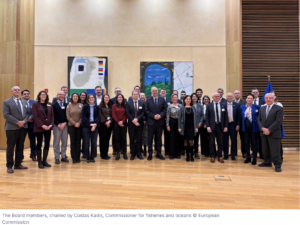 LIFE is proud to announce its selection onto the European Ocean Board, a newly established high-level advisory body to the European Commission. Bringing together 28 experts and representatives from across ocean-related sectors, the Board will provide strategic guidance on the future direction of EU ocean policy.
LIFE Executive Secretary Marta Cavallé will represent the organisation, ensuring that the voice of small-scale fishers and their communities is heard at the highest level of decision-making.
The inaugural meeting took place in Brussels, where LIFE introduced its work and highlighted key priorities for the implementation of the Ocean Pact, including what outcomes should look like from the perspective of low-impact fisheries. As part of her statement, Marta highlighted “The Ocean Pact will be successful if it restores fish stocks and the marine environment, through better implementation of existing legislation, improved scientific knowledge, and the establishment of clear, binding environmental targets and indicators, while also ensuring that those who depend on the ocean can make a living. The Ocean Act must provide the legal clarity needed to operationalise the prioritisation of small-scale fisheries set out in the Ocean Pact, clearly defining how to halt their current decline, strengthen their resilience, and enable them to achieve their full future potential”
LIFE looks forward to contributing constructively to the Board’s work and to helping shape policies that support a fair and sustainable future for Europe’s seas.
2-5/3 European Ocean Days
LIFE participated in the European Ocean Days, contributing to discussions on the future of EU fisheries and coastal communities.
During the session on the Vision 2040, small-scale fisheries were widely recognised as a priority. However, their effective representation in the discussions was lacking, with a gap between stated ambitions and concrete actions. LIFE, together with partners, advocates for a Vision that balances economic and environmental objectives, addressing both ecological and social challenges, including the continued decline of the sector across Europe.
During discussions on the upcoming EU Strategy for Coastal Communities, LIFE noted with concern the strong focus on blue growth sectors and innovation, with limited attention given to small-scale fisheries. LIFE considers this a missed opportunity and calls for small-scale fisheries to be placed at the centre of the strategy, recognising their key role in supporting coastal livelihoods, cultural heritage, and resilient local economies.
11-12/3 Nordic Seafood Summit
LIFE participated in the Nordic Seafood Summit in Gothenburg, bringing together actors from across the seafood value chain. The event highlighted growing interest in underutilised species, including round goby, and their role in more resilient seafood systems.
Discussions with chefs, industry and project partners pointed to clear opportunities for product development and market uptake, while also underlining remaining challenges related to processing and logistics. For LIFE, the Summit confirmed the relevance of the Round Goby project in developing new value chains that can benefit small-scale fishers.
16/3 Mediterranean fishers warn of declining fish stocks
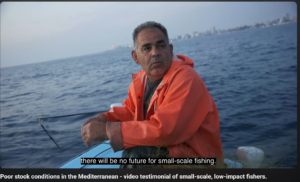
Small-scale fishers from France, Spain and Cyprus are raising the alarm over declining fish populations, degraded ecosystems, and increasing pressure on their livelihoods. In a new video testimonial, they highlight that the crisis is not due to a lack of rules, but to insufficient implementation of the Common Fisheries Policy. When properly enforced, existing legislation can rebuild stocks and support coastal communities.
The video was developed in collaboration with partners including Seas At Risk, ClientEarth, Ecologistas en Acción, Oceana, Med Sea Alliance, and with the support of Meridian Agency.
16-17/3 LIFE follows key EU discussions on maritime spatial planning and the Ocean Act
LIFE participated as an observer in the 30th meeting of the Member States Expert Group on Maritime Spatial Planning.
Discussions focused on the upcoming revision of the Maritime Spatial Planning Directive, with particular attention to improving alignment with the Marine Strategy Framework Directive, as both frameworks are currently under review. In parallel, work is advancing on the development of a future EU Ocean Act. Preliminary policy options are currently being explored as part of the impact assessment process and remain subject to further refinement. Member States have been invited to provide feedback on these options.
24/3 LIFE position on EMFAF amendments
LIFE has published its position on how the European Maritime, Fisheries and Aquaculture Fund (EMFAF) should support the energy transition in fisheries. LIFE welcomes the announcement by Charlina Vitcheva that EMFAF sectoral support will be amended to include energy transition measures as an important step.
However, LIFE stresses that limited public funds must be used to support a fair and sustainable transition, prioritising small-scale fisheries and avoiding harmful capacity-enhancing subsidies. LIFE’s proposals aim to guide the use of EMFAF funding, in line with recommendations from the Small-Scale Fisheries Working Group of the Energy Transition Partnership.
25/3 LIFE Board of Directors meeting – key highlights
LIFE’s Board of Directors met to review ongoing activities and discuss key policy and strategic developments.
Directors were updated on LIFE’s Annual plan and main policy priorities, including the evaluation of the CFP and CMO, the development of the Ocean Act, Maritime Spatial Planning, and the Multiannual Financial Framework (MFF). LIFE’s recent engagements—such as contributing to consultations and securing a seat on the Ocean Board—were also highlighted.
Strategic discussions focused on preparing for the upcoming CFP evaluation and advancing work within the Energy Transition Partnership. The Board also discussed LIFE’s contribution to the EU Islands Strategy and approved a working definition of small-scale fisheries based on EMFAF criteria.
Finally, members raised concerns about rising fuel prices and their impact on small-scale fisheries, highlighting the need for stronger support mechanisms at EU level.
30/3 AGRIFISH Council
LIFE followed the public sessions of the AGRIFISH Council , which included discussions on the energy transition in fisheries as well as reporting on the implementation dialogue on small-scale fisheries held by the EU Commission in November 2025.
On the energy transition, several Member States referred to the need to adapt the European Maritime, Fisheries and Aquaculture Fund (EMFAF). In this context, LIFE considers that such a development could represent an important opportunity, provided that support is carefully targeted towards small-scale fisheries and avoids measures that may risk increasing fishing capacity. LIFE also welcomes the emphasis on exploring complementary financing solutions, including through the European Investment Bank, particularly in light of concerns that SSF may struggle to access funds available under the next EU budget – the Multiannual Financial Framework – due to competition from other sectors.
The Council also discussed the implementation dialogue on small-scale and coastal fisheries, which LIFE sees as an important part of the European Commission’s ongoing work. The Commission reported key important conclusions providing an opportunity to reflect on preferential access for small-scale fisheries within the 12-nautical-mile zone and to revisit SSF access to fishing opportunities through a more enlightened approach to Article 17 (as highlighted in the recently published Vademecum).
Efforts to reduce administrative burden were highlighted by several Member States and are seen by LIFE as positive, provided that changes are tailored to the needs of small-scale operators and accompanied by adequate support and guidance at national level. At the same time, LIFE notes with some concern the limited reference or progress made by Member States on improving fishing quota allocation systems and access to space.
Overall, according to LIFE, further concrete action at EU level—notably via a dedicated Action Plan for small-scale fisheries by 2026—is urgently needed to change the direction of travel and address the various challenges facing the sector. LIFE is pleased to see such a proposal highlighted in the Commission’s report as follows: “The absence of a dedicated and binding EU Action Plan for small-scale and coastal fisheries was repeatedly highlighted, alongside the lack of clear timelines and accountability mechanisms, which was seen as contributing to regulatory uncertainty for fishers and support organisations alike”.
New team member: welcome to Claudia Giulia Cantele Silva
 LIFE welcomed Claudia Giulia Cantele Silva as its new Administrative and Financial Officer.
Working from the Brussels office, she will play a key role in enhancing internal systems and supporting the smooth financial management of activities across the organisation.
Coming up
15/4 Brussels – PECH Committee meeting. Agenda here.
16/4 Brussels – Energy Transition Partnership workshop on the Energy Transition. Registration here.
23/4 Online- Energy Transition Partnership – Baseline for the energy transition Study Workshop (All SSF WG members of the ETP are invited)
In the press
Industrias Pesqueras: piece by Brian O’Riordan on the Make Fishing Fair Roadmap
NIFA Warns Inshore Fuisheries Face Collapse Amid Fuel Crisis
EU Raises Mackerel Quotas Despite Scientific Warnings
Generational Renewal is a Challenge for Small-scale Fisheries
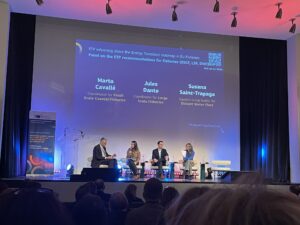
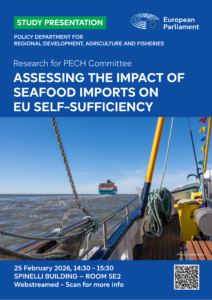 LIFE attended the February meeting of the European Parliament’s PECH Committee, where a study on
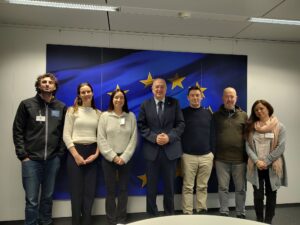 LIFE’s President Gwen Pennarun and the Secretariat, together with our partner organisation Blue Ventures, met with Costas Kadis and his Cabinet to advance discussions under the
 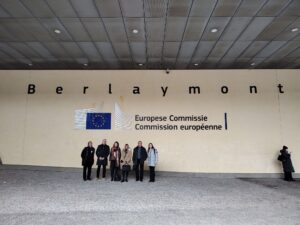 A delegation from the Fishing Prud’homies of Mediterranean France visited Brussels to engage in discussions with Commissioner Costas Kadis and Members of the European Parliament. The meetings addressed the pressing challenges faced by small-scale fisheries and coastal communities.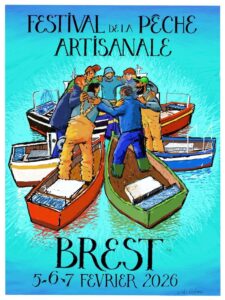

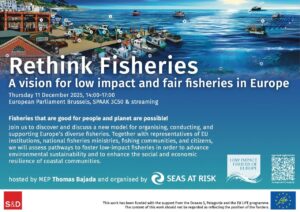

 LIFE actively participated in this year’s
  22/10 LIFE members excluded from market as they lack MSC certification
 On 3 September, LIFE took part in the
  On 9 September, LIFE Senior Advisor Jeremy Percy attended the


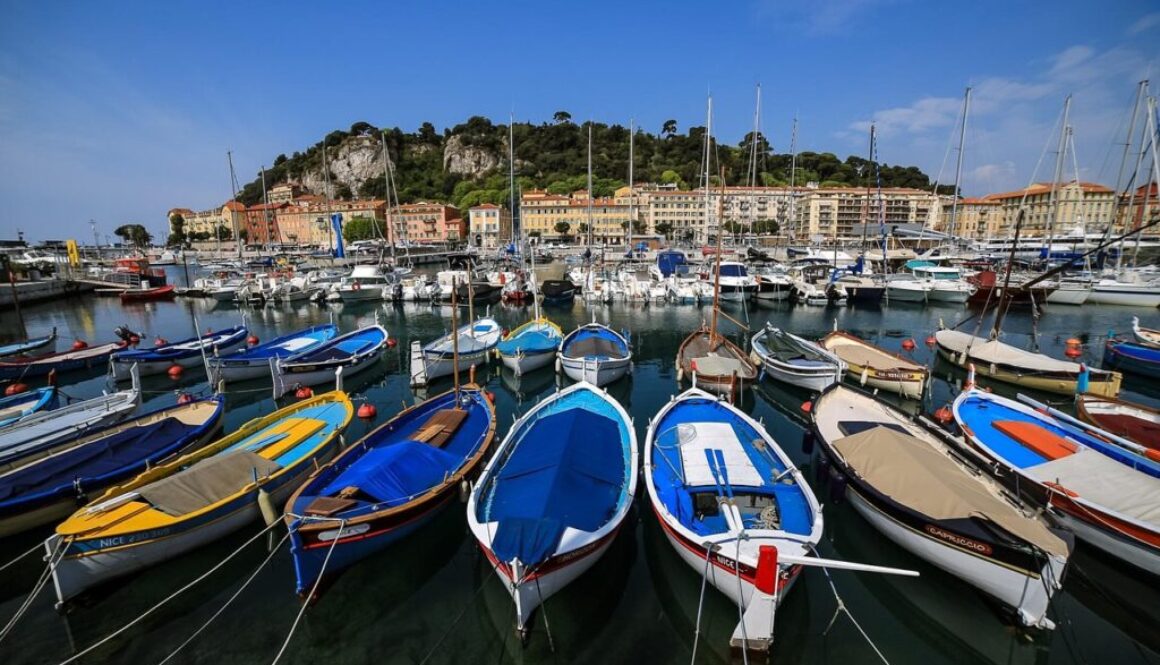


 9/4 Brussels, Belgium – LIFE President Gwen Pennarun joined LIFE staff to meet with EU Commissioner Kadis and his team, using the opportunity to address the key challenges facing Europe’s small-scale fisheries.. LIFE presented its vision for a fair and sustainable future for the sector, highlighting how the 2024–2029 European Commission mandate could strengthen support for the small-scale fleet. Pennarun was able to share his professional experience of how opportunities to achieve fair fisheries are being squandered through unfair policies and partial implementation of the CFP, providing the concrete examples of Bluefin tuna, pollack, and seabass. He also highlighted his work to train and guide young fishers into the profession, and how partial implementation of the CFP – notably Article 17 – has led to future generations of fishers being discriminated against, albeit unintentionally.
  8/4 Brussels, Belgium – President Gwen Pennarun and LIFE staff held a constructive meeting with MEP Eric Sargiacomo (S&D) focused on key issues facing small-scale fishers and coastal communities. Sargiacomo expressed strong support for the men and women who take to the sea each day to provide quality seafood, sustain coastal communities, and preserve traditional knowledge. “They provide an indispensable thread in the social fabric that holds our coastal communities together”, he said. The discussion touched on crucial topics including maritime spatial planning, climate change, fishing opportunities, resource sharing, and fisheries governance—all of which require collaborative action moving forward.