LIFE Signs Up to Statement Criticising Industrial Feedlot Aquaculture – Battery Farming Fin Fish in the Sea
In the latest State of World Fisheries and Aquaculture Report (SOFIA 2026), the steadily growing importance of aquaculture compared to capture fisheries is highlighted. In 2024 aquaculture production of aquatic animals exceeded 100 million tonnes, compared to capture fisheries which extracted 92 million tonnes.
For LIFE, such news is to be welcomed, particularly where aquaculture can complement and be combined with small-scale low impact inshore fisheries. Non-fed aquaculture, i.e. aquaculture that uses the natural production of the sea to produce seafood in the form of bivalve molluscs and seaweeds, can also help to restore degraded marine habitats and clean polluted waters, whilst providing food and livelihoods for coastal communities.
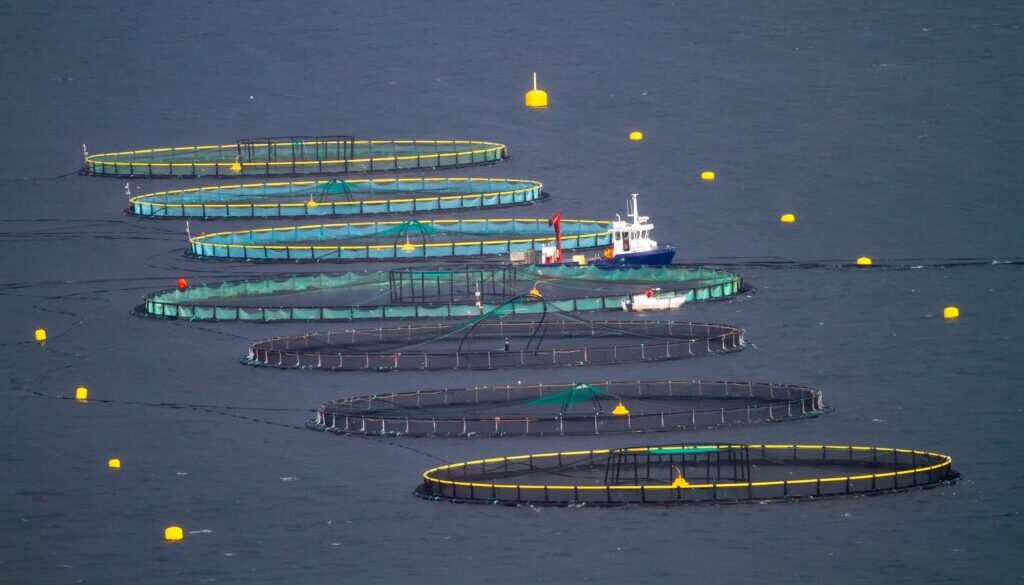
However, there is a dark side to aquaculture. As on land for pigs, poultry and cattle, at sea for finfish the intensive industrial feedlot production is the cause of significant pollution, coastal enclosure, environmental degradation and habitat destruction to the detriment of small-scale fisheries and coastal communities. Such carnivorous aquaculture systems depend critically on fishmeal and fish oil incorporated into aquafeeds. Fishmeal is derived from a variety of sources, including from so-called “feed fish”, small-pelagic species. Reduction of such fish to fishmeal and oil can impact the food and livelihood security of coastal communities around the world, from the Baltic Sea to the coast of West Africa.
This is why LIFE has signed up to a joint statement on aquaculture presented to the 37den Session of the FAO Committee on Fisheries (COFI 37). The statement was drafted by the African Confederation of Artisanal Fisheries Organisations (CAOPA) and endorsed by 21 Civil Society and Small-scale Fishing (SSF) Organisations.
LIFE feels that joining up to such a statement is particularly important following the speech of the FAO Director General to the SSF Summit where he questioned the nutritional quality of wild fish, portraying fishing as an activity that is generally neither sustainable nor environmentally friendly, nor capable of generating sufficient income.
Photo credits @LTapsaH