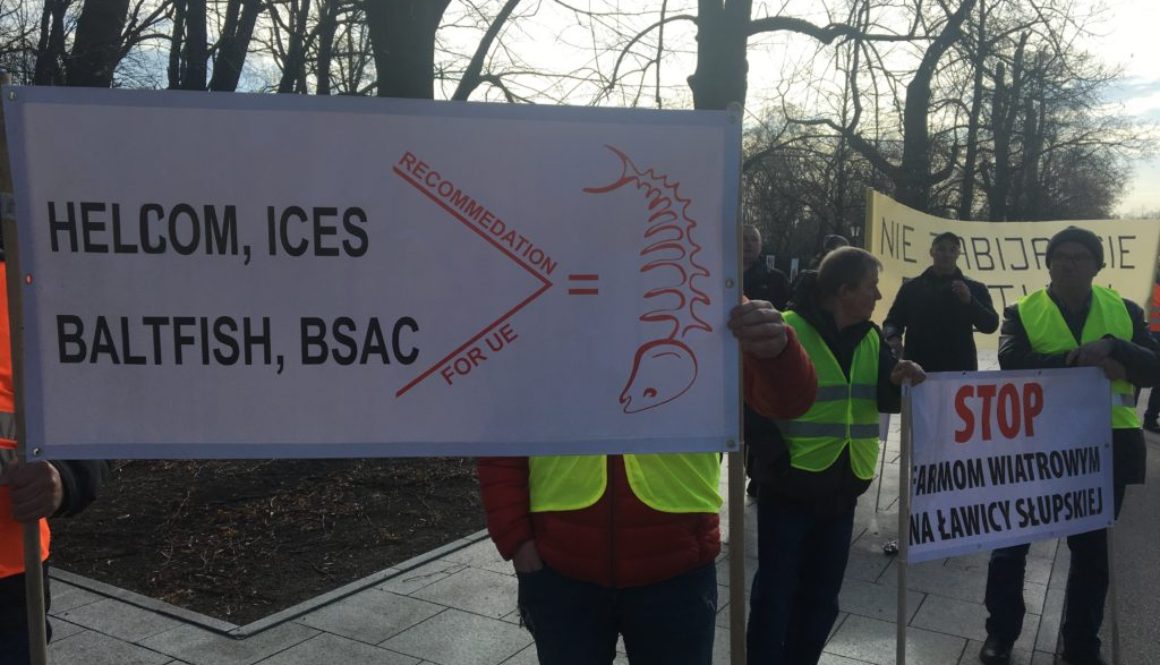
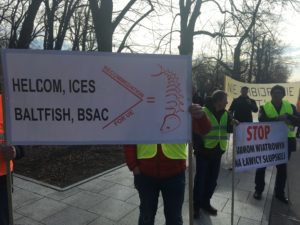
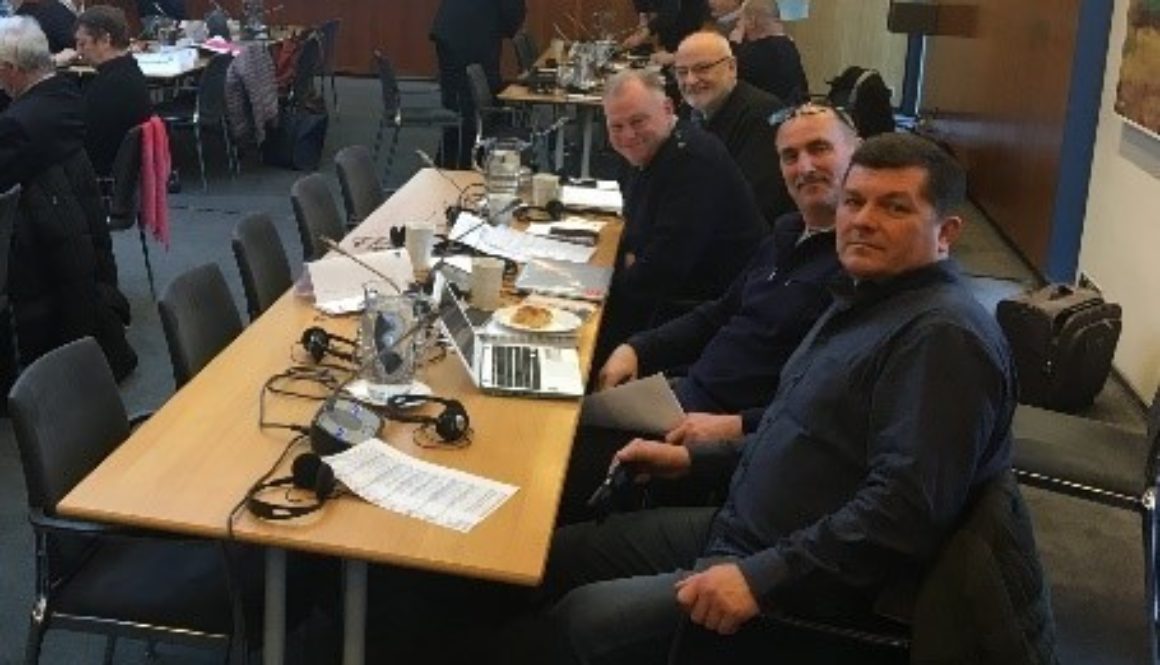
Poland: SSFs protest against the situation in the Baltic Sea

Polish small-scale fishers are efficient in their protest against the situation in the Baltic Sea
Warsaw, 27th February 2019
Marcin Ruciński
Access the official PR in English here

Warsaw, 27th February 2019
Marcin Ruciński
Access the official PR in English here
This is an opportunity to be grabbed with both hands: old seadogs must learn new tricks!
Brussels, 20th of February 2019
Brian O’Riordan
The European Fisheries Control Regulation is being revamped. Several recent reports, including from the European Court of Auditors, have drawn attention to the inadequacy of the fishery controls in place for meeting the needs of the CFP. Currently a European Commission proposal for amendments to the Control Regulation is before the European Parliament and Council of Ministers. However, wheels turn slowly in Europe, and there is a strong likelihood of delays due to European Parliamentary elections in May and due to the renewal of the College of European Commissioners in September.
There is therefore likely to be a new Parliament, a new Fisheries Commissioner, and a reshuffle of posts in DG Mare before much progress is made on the file. Be that as it may, the fishing sector can expect a new regulation to be adopted by early 2021. It is set to be applied two years after the date of its entry into force, which will take us well into 2023.
The sector therefore has roughly five years to prepare itself for the revolution that is envisaged for vessel monitoring and catch reporting. According to DG Mare this should see an end to paper. A key problem with paper reporting is the huge amount of work it generates for the control authorities.
The electronic revolution in catch reporting will particularly affect the small-scale (SSF) under 12 metre vessel fleet. The EC proposal specifies that “all vessels including those below 12 metres’ length must have a tracking system”, and that “all fishing vessels below 12 m must report their catches electronically”. The proposal stresses that “for vessels 12 metres’ in length it is now possible to use mobile devices which are less expensive and easy to use”, and that “any additional burden for small operators (small-scale fishermen) will be avoided by the introduction of easy and cost-effective reporting systems for fishery data, taking advantage of affordable and widely available mobile phones technologies.”
Whilst the under 12 metre passive gear fleet makes up over 80% of the fleet by numbers, employs over 50% of the workforce, and may account for up to 50% of the fishing effort in terms of days at sea, the SSF fleet only contributes 6% by weight and 12% by value of the total EU catch. In some countries, for example the Netherlands, it only accounts for 1% of national landings. Judged by gross tonnage (8% of total fleet), fuel use (6%) and engine power (32%), the overall the SSF fleet shows a significantly lower impact compared to the larger scale fleet.
This raises the question as to why so much emphasis is being put on electronic monitoring and catch reporting in the small-scale fleet? Is a sledge hammer being used to crack a nut?
Whilst this may be a valid question, digital technologies do provide an opportunity for the SSF to operate their businesses more efficiently, to plan their fishing trips more strategically, to market their catches more effectively, and to engage more meaningfully in fisheries management. In short, digital technology provides a huge opportunity for the small-scale fleet, and LIFE encourages the SSF to grab it with both hands.
In early December, in cooperation with Member States DG Mare organized a workshop on Digital Tools for Small Scale Fisheries to take a closer look at current initiatives on electronic monitoring and catch reporting. The three sessions covered electronic monitoring, digital tools for catch reporting, and the use of EMFF as an EU funding mechanism. The EC proposal for a new EMFF post 2020, now before the European Parliament and Council, highlights that “certain obligations foreseen by the revision of the Control Regulation justify a specific support from the EMFF”, including “the compulsory vessel tracking and electronic reporting systems in the case of small-scale coastal fishing vessels, and the compulsory remote electronic monitoring systems.”
A full report from the meeting is available on the DG Mare website (https://ec.europa.eu/newsroom/mare/document.cfm?action=display&doc_id=57359), along with the presentations made at the workshop (https://ec.europa.eu/fisheries/press/outcomes-workshop-digital-tools-small-scale-fisheries-brussels-4-5-december-2018_en).
The 16 presentations made at the workshop and the subsequent discussions highlighted that the Brave New World of catch reporting is not just waiting in the wings but has been around for several years. Technological solutions, including voice recognition, artificial intelligence, machine learning, and drones (underwater and airborne) are already out there, and finding ready use in SSF.
That said, however effective and easy to use new mobile technologies may be, unless there is an effective application programming interface (API) between the mobile technology and the server logging the catch data, together with the required infrastructure to actually handle the data flows in the first place then the new Control Regulation is going to be more of a road block than a route map for effective and efficient fisheries management in Europe. In this regard, the interconnected issues of data protection and privacy are a cause for concern, especially as regards CCTV footage. CCTV is a major element in the new Control Regulation, particularly as regards the implementation of the landing obligation.
Several of the presentations highlighted that automated systems of vessel monitoring, particularly when using active gears, are able to provide insights into vessel activity. Providing, as they do, data on position, speed and direction of a particular vessel, changes logged in speed and direction may indicate when gear is being set, towed and retrieved. This can then be cross checked with logbook information to verify the accuracy of data provided on time of setting and retrieving gear, and location of fishing grounds.
There was much discussion on sea safety issues, where several participants drew attention to the inherent danger of multi-tasking on small vessels in adverse sea conditions, and with treacherous currents and tides. There were calls for catch reporting to be done after entry into port rather than making it obligatory to file catch notifications prior to landing.
The increasing age of small-scale fishers was also raised as an issue of concern. In several cases it was noted that older fishers had difficulties in adapting to computer based and digital technologies. Intergenerational renewal is a particular problem in fisheries, and the SSF is no exception. Related to this is the issue of errors arising in data entry, invalidating catch reports. Several practitioners drew attention to the need for adequate training and allowing adequate time for fishers to learn how to use and to become adept in using digital catch reporting systems. Inadequate training and lack of familiarity with digital tools would lead to large numbers of errors arising invalidating the data recorded.
Last but not least, a key take home message from the meeting was that the data generated by electronic monitoring and catch reporting for control purposes, could also contribute to many other purposes. For example, the multi-use of logbook and position fixing data could greatly assist fishery managers, scientists, and the fishers themselves.
Resources:
Sledge Hammer and Nut: https://lifeplatform.eu/control_regulation/
European Court of Auditors Special Report No 08/2017: EU fisheries controls: more efforts needed https://www.eca.europa.eu/en/Pages/DocItem.aspx?did=41459
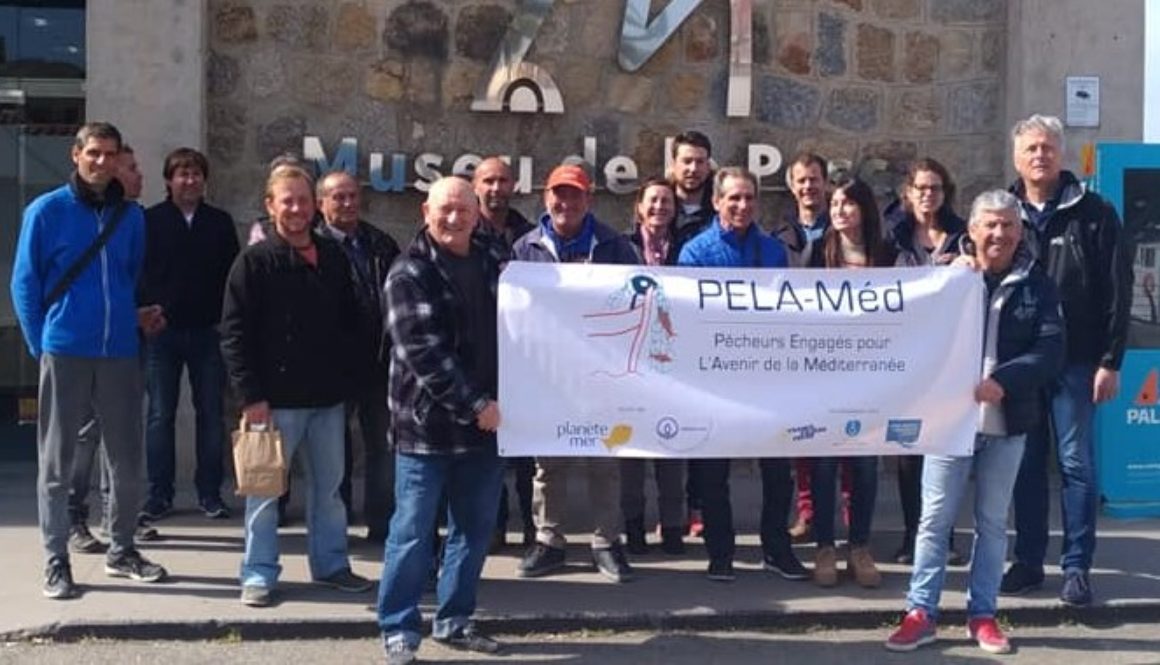
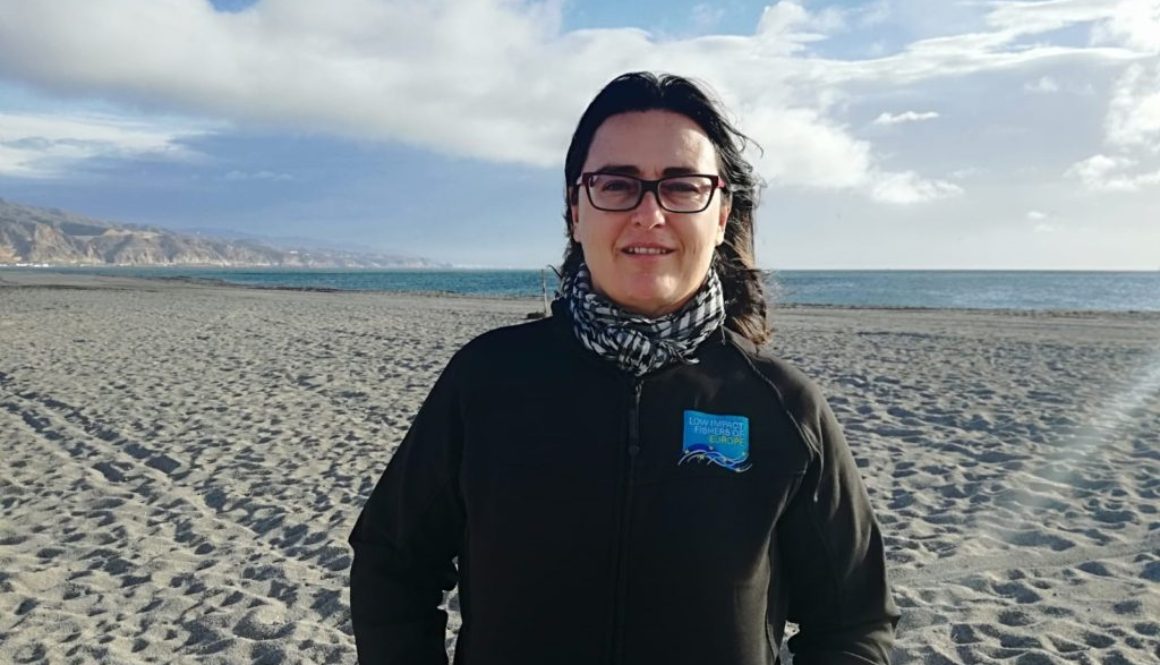
In the framework of its three years project “Mainstreaming small-scale low impact fisheries in the Mediterranean” funded by the MAVA Foundation, LIFE is reinforcing its presence on the ground in order to provide increased support to the small-scale fishing communities in the region (click here for more information on the project). Macarena Molina was selected to help LIFE in this important task across the Alboran Sea.
Dear Macarena, welcome to LIFE! We are really glad to have you as part of the team. With a background in biology and a number of years working aboard small-scale fishers vessels, you have a deep knowledge of the sector from both an academic and practical point of view. Can you tell us more about yourself and where this passion comes from?
I started to work with fishers as a marine environment officer and in the framework of that experience I had the opportunity to discover the deep knowledge fishers have about the sea, their generosity in sharing it with me but also the difficulties they face as small-scale fleet. I decided to spend time with them for a personal interest, because I wanted to learn from them and to give them back a little of what they gave me by committing and giving value to the cause of small-scale fisheries.
You worked for a number of years aboard the vessel of Luis Rodriguez Rodriguez, representative of LIFE spanish member organization Pescartes. Can you explain to us what you learnt from this experience about the world of small-scale fisheries, and especially about the sector in the Alboran sea region?
This experience raised my awareness on the challenges faced by commercial small-scale fishers, on the lack of representation within institutions and how little they are listened to. I also learned more on the passion that they put in their work and the interest they generate in all of those who approach them.
From a biology point of view, what are the main characteristics of the Alboran sea region and the issues that affect the local ecosystems and, in consequence, fisheries activities?
The Alboran Sea is the “regeneration” channel of the Mediterrean Sea, the entry point of the Atlantic ocean’s waters that, through its currents, keep the Med “alive”. It has peculiar characteristics affecting fishing activities such as the number of species available in the area, hydrodynamic conditions as well as its geographical and bathymetric profile and different ecosystems. It is in fact the entry and exit point of migratory species, some of which are interesting for fisheries interests.
The main mission of LIFE is to provide a voice for the sector at the institutional level, but also to support fishers with overcoming their challenges on the ground. What are the priorities that you plan to tackle first, in the light of the needs of the communities of the Alboran Sea?
I believe the first step should be to streghten LIFE’s profile within small-scale fishing communities in the area, as that will help to overcome the isolation of the sector which is one of its main weaknesses. I aspire for member organisations to set the course of LIFE, but first I have to explain to her how to interact with the organization overall.
The start of your cooperation with LIFE coincides with the conclusion of an important project funded by the Carasso Foundation in the framework of which you had a coordination role: Pescados con Arte. What have been the main results of such a project and are there any best practices that you would recommend to replicate in other fishing communities across Europe?
Pescados con Arte has been a very enriching experience that confirmed the interest of the wider public for our sector. It would be great if other small-scale fishing communities could replicate it in their respective areas as it would generate positive effects from a social point of view and help to raise the profile of small-scale fishers.
As a committed activist for the rights of small-scale fishers, you have already been in touch with LIFE’s partner organization AKTEA, the European network for women working in fisheries and aquaculture. What do you think of such a movement and what contribution could you provide to its growth and reinforcement?
I believe the contribution of women to fishing communities and the wider sector is very important. It is important to create spaces where they feel strenghtened and supported to share their concerns. Aktea is definitely an opportunity in this respect and I will work to ensure it becomes an helpful tool.
♦ ♦ ♦

28th of January 2019
Jerneja Penca
Small-scale and artisanal fisheries in the Mediterranean represent an important element of coastal communities engaging in low-impact fishing activities, providing local supplies of fresh fish on a daily basis, and forming an integral part of the cultural heritage. They are naturally highly adaptable, which is crucial in mitigating impacts of ecological and economic changes. However, their multifaceted contribution to the healthy, productive and resilient Mediterranean Sea remains insufficiently recognized both by policy makers and consumers. They face market competition from large-scale fishery products, foreign imports, and aquaculture products. Too little distinction is made between products of various provenience, quality, fishing gear and socioeconomic impact on producers, including their jobs and well-being.
Tools for a greater push of the market in the direction of awarding good practices are needed, ideally in the transnational context. This project seeks to contribute to a more aware, sustainable, and sophisticated seafood market that valorizes the role of small-scale fisheries in countries across the Mediterranean. The project will develop a feasibility study of a labelling or another market scheme, awarding recognition for products by small-scale fishers that adhere to and implement sound region-specific ecological and socioeconomic principles.
The consortium is composed of seven individuals from research, non-governmental and fishers organisations, as well as a consultancy, and covers areas of fishery and marine science, legal and governance aspects, and social, cultural, and economic factors in selected BlueMed member countries and Lebanon. The consortium and a number of experts relevant to the action will meet three times in the period between January 2019 and March 2020 to address the goal.
Consortium members
Supported under the BLUEMED Call for Start-up Actions 2018: http://www.bluemed-initiative.eu


Brussels, 16th of January 2018
Brian O’Riordan and Marcin Ruciński
LIFE calls on MEPs to reject amendments 10, 19, and 39, which aim to expand the definition of small-scale fisheries and create an uneven playing field across Europe.
Imperfect as it is given the great diversity of small-scale fleets, the simple definition – under 12 metres and not using towed fishing gears – offers some basic clarity, a level-playing field and comparability of fisheries across the EU.
In one month’s time, MEPs in the European Parliament’s Fisheries (PECH) Committee are scheduled to vote on amendments to the EC proposal on the European Maritime and Fisheries Fund (EMFF) for the years 2021-2027.
For LIFE it is of critical importance that the much-needed financial support directed to small-scale fishing communities in the proposal will actually get to where it is intended. We see some worrying signs that, yet again, vested interests are at work to divert crucial support away from the small-scale fisheries sector.
LIFE lauds the Commission for taking the right step by proposing to simplify and re-orient the funding priorities away from big fleet investments and top-down management to opening the financing to the freedom of design for Member State-level Operational Programs. Fundamentally, the difficult situation of small-scale fisheries across Europe has been responded to by the requirement to have an Action Plan for small-scale fishing – and the actions within it can benefit from a co-financing rate of up to 100%.
LIFE welcomes this move, which responds to the results of our in-depth analysis in the Baltic and North Sea regions[1] and to the deliberations of the “Beyond 2020” EMFF Stakeholder Conference on “Supporting Europe’s Coastal Communities”, held in Tallinn, Estonia, 12-13 October 2017[2]. In his opening address to the conference, Commissioner Vella highlighted how nearly half of all small-scale coastal fleets are still making losses – hence the need for affirmative action projects to favour the small-scale sector.
LIFE calls on Member States to ensure that genuine small-scale fishers’ representatives are involved with the shaping of these Action Plans, to ensure that much needed support is channelled to actions that will make a real difference in the struggle to sustain this vital sector.
The response from large-scale interests to expand the definition of small-scale fisheries is not unexpected. They have benefited hugely from the previous rounds of EMFF. It is high time that Europe levelled the playing field and devoted support and attention to the majority of the fleet (over 70%), to the small-scale sector that fishes in a low impact manner and with significant potential to add value at local level.
LIFE therefore calls on MEPs to reject the amendments 10, 19 and 39 proposed in Rapporteur Gabriel Mato’s draft report, which aim to expand the current, simple and universally applicable EU definition of small-scale fisheries: boats less than 12 meters length not using towed fishing gears. Imperfect as it is given the great diversity of small-scale fleets, this simple definition offers some basic clarity, a level-playing field and comparability of fisheries across the EU.
The Rapporteur’s amendments 10 and 19[3] offer a complete freedom for Member States to design their small-scale definitions as they please. They will result in an unlevel playing field between Member States and confuse the understanding of what SSF actually is: small in scale, low in impact and high in social value. Amendment 39 proposes to extend EMFF support to vessels up to 24 metres in length. These amendments provide a huge loophole for larger-scale fishing interests that currently dominate the policy, administrative and financial playing field to gain access to EU financing on strongly preferential terms – very much the contrary of Commission’s original intentions.
Next week, on January 23, ahead of this crucial vote on the EMFF in the PECH Committee, a Hearing on the Future of Small-scale Fisheries in the EU will be organized[4]. The agenda provides the opportunity to focus attention on 2 key aspects: the need for a differentiated approach to managing small-scale fisheries through a dedicated EU action plan; and the need for national allocation systems to properly take the needs of small-scale fisheries into account.
This provides a golden opportunity to focus attention on the CFP provisions that allocate priority access to small scale fishing operations in the 12-mile zone, for criteria of an environmental, social and economic nature to be used to allocate quota and to incentivize low impact fishing with additional quota, as prescribed under Article 17. To date, these provisions have not been given the attention they deserve. They are more honoured in the breach than in the observance.
LIFE is disappointed not to have been invited to speak on the panels. It is an opportunity missed. We hope that panellists invited from the Azores, Germany, Ireland, Spain and Italy whose organizations purport to represent both large and small-scale interests, will not just toe the line of the status quo, but that through their presence the interests of the smaller-scale fishers will be properly represented and articulated.
LIFE calls on all the MEPs and fisheries policy stakeholders to make sure that the glimmer of hope offered to small-scale fishers by the EMFF proposal is not squandered by expanding a long-standing and clear small-scale fisheries definition. It is not broken. It works well. It does not need fixing.
For way too long, small-scale fishers have been alienated and disenfranchised by the CFP. It is high time for change, time for small-scale fisheries to be included more centrally in fisheries policies, so that coastal communities are not just able to survive, but also to thrive.
[1] https://lifeplatform.eu/wp-content/uploads/2018/06/LIFE_BANS_Final_Technical_Report.pdf; see Recommendation 2, page 4.
[2] http://www.emff-now-and-then.eu/documents/DG-MARE-Conclusions-Conference-A4-03.pdf
[3] http://www.europarl.europa.eu/sides/getDoc.do?pubRef=-//EP//NONSGML+COMPARL+PE-625.439+02+DOC+PDF+V0//EN&language=EN
[4]http://www.europarl.europa.eu/cmsdata/159323/Programme%20PECH%20public%20hearing%20Future%20of%20small%20scale%20fisheries%20in%20the%20EU%20.._.pdf
Brussels, 9th of January 2019
In the light of the vote on the Multiannual Plan for the fisheries exploiting demersal stocks in the western Mediterranean Sea that will take place on the 10th of January 2019 at 9:00 in the PECH Committee, LIFE writes to the Members of the European Parliament to outline the amendments that need to be endorsed to the benefit of the small-scale sector.
Access the letter sent to MEPs by clicking here
Access the agenda of the meeting and watch it in streaming here
19th December 2018
Update: LIFE reacts to the Council’s agreement on bass and eel
LIFE is disappointed to note that Fisheries Ministers have failed to grasp the economic importance and the social and environmental significance of the commercial hook and line fishery for seabass. Instead of rewarding this sector with a significantly increased allocation, rather they have seen fit to increase the allowance for mobile gears, doubling the allowance for demersal trawlers. This sends out the wrong signals and raises questions on the political will of the Council to take serious measures to conserve northern sea bass. It is also a lost opportunity to apply the spirit of Article 17 by rewarding and giving incentives with increased access those fishing vessels deploying selective fishing gear and using fishing techniques with reduced environmental impact.
On the positive side, LIFE notes that the 1% cap on fixed netters has been lifted, and their allowance raised from 1.2 to 1.4 tonnes over the year. This is a lifeline for those fishers who use small-scale fixed nets in mixed fisheries, and for whom by-catches of seabass provide a vital economic contribution to their struggling livelihoods.
But the devil is in the detail, and we look forward to seeing the revised text of the EC proposal on 2019 fishing opportunities.
Based on the information available[1] following the conclusion of Council negotiations, LIFE cautiously welcomes the outcome for European eel stock. For a long-lived species such as eel, it is makes sense to continue the coordinated closures at national level and have them broadly applied – for all eel life stages, in particular the glass eel, and to recreational fisheries.
The work towards the much-needed eel recovery is far from over. We urge the EU Institutions to elaborate a full, credible and realistic package of actions to make sure that European eel has a bright future. It must squeeze life out of illegal eel fisheries of all kinds, in particular “Europe’s own ivory trade” – the glass eel trafficking. An all-encompassing Catch Documentation Scheme for all eel catches may be helpful in achieving this aim. Equally, it needs to address sources of eel’s non-fishery anthropogenic mortality, with special attention to turbine mortality and the impact of black cormorants. As ever, LIFE will spare no effort to offer constructive ideas based on the experience of practitioners.
[1] Public information on the outcomes of the Council meeting https://www.consilium.europa.eu/media/37643/st15654-en18v2.pdf
17th December 2018
Brian O’Riordan
European Union Fisheries Ministers will meet in Brussels today and tomorrow, Monday 17 and Tuesday 18 December for the annual “Christmas Fisheries Council” to agree on fishing opportunities for 2019 for the Atlantic, North Sea and Black Sea. Over the last year, fisheries managers have been upbeat on progress towards MSY targets, but even so the Fisheries Council must strike a delicate balance between protecting fragile and vulnerable stocks and allowing increased access commensurate with stock recovery.
It is a delicate balance between following the precautionary approach to safeguard resources on the one hand and sustaining economic activity and livelihoods on the other: combining environmental sustainability with a fair and equitable allocation that is in the interests of all. For small scale low impact fishers the Christmas Council is generally seen as a Christmas quota carve up, which benefits mainly the larger scale fishing interests. In the main, smaller scale interests have been marginalised by an unfair quota system and alienated from quota species. This has been a major failing of the much heralded 2014 CFP reform, which despite much promise – notably Article 17[1] – has failed to deal with inter-sector inequalities and level the playing field between larger and smaller scale fleets.
This lack of quota and lack fair access to quota is a major barrier for smaller scale fishing operations to survive and thrive and could be the final straw on January 1 2019 if the Landing Obligation is fully implemented, as intended. Without quota for target or choke species, the EU’s zero discards policy could become a zero-fishing policy for small scale fishers, effectively outlawing most fishery operations.
Finding the right balance is particularly critical in the case of bass (Dicentrarchus labrax). Since 2015 EU wide conservation measures have been in place to reduce fishing pressure on this valuable but highly vulnerable stock. Efforts since 2015 have focussed on reducing targeted fishing effort on bass, including through a fisheries closure when stocks are at their most vulnerable during their spawning season (in February and March), and closing the fishery entirely for pelagic trawlers.
Following a benchmarking process earlier this year, ICES advice for bass in divisions 4.b–c, 7.a, and 7.d–h (central and southern North Sea, Irish Sea, English Channel, Bristol Channel, and Celtic Sea) was published in June 2018. This proposed a change in approach from a precautionary approach in 2017 to an MSY based approach for 2018 and 2019. In their 2017 advice on bass in these sea areas ICES had recommended that commercial catches in each of the years 2018 and 2019 should be no more than 478 tonnes. In their 2018 advice for bass, based on an MSY approach ICES upped this, and advised that total removals (for both commercial and recreational sectors) in 2018 should be no more than 880 tonnes; for 2019 no more than 1,789 tonnes. The 2017 cap of 478 tonnes did not take recreational fishing into account; the higher figures provided in 2018 do.
This most recent ICES advice highlights a delicate balance between poor recruitment and low spawning stock biomass on the one hand, and a perceived lowering of fishing effort on the other. Worryingly ICES advise that the spawning–stock biomass (SSB) has been declining since 2005 and is now below Blim. Also worrying is the estimated poor recruitment since 2008; only the 2013 and 2014 year-classes estimates show average recruitment. Along with the average recruitment for 2013 and 2014, the only cause for optimism is that fishing mortality is deemed to have peaked in 2013, to have declined rapidly since then, and is now estimated to be below FMSY.
All this has led to some optimism that the medicine may be working, and that bass stocks are on the road to recovery. To a certain extent this is borne out by the catches and observations of LIFE’s hand line fisher members over the 2018 season. Whilst good catches of bass have been patchy and there has been some mixed success, along the Atlantic coast of France, the South coast of the UK, and the southern North Sea coasts of UK, Belgium and Netherlands, fishers have reported seeing large quantities of bass just below the MCRS. This indicates the possibility of a rosy future, if these bass are able to survive to grow and spawn over the next 2 years.
And this is a big IF. On all sides the fate of bass is beset by many challenges. High on the list of these challenges is the aggregation of mature bass over the winter months, starting in October, and lasting through to March and sometimes up to June. This makes them highly vulnerable to the targeted and untargeted fishing by larger scale and semi-industrial smaller scale netting operations. Likewise, aggregations of juvenile fish below MCRS makes them vulnerable to these gears. If mobile and larger scale fixed net operations take evasive measures to avoid these aggregations, then unintended and potentially destructive impacts on bass stocks can be reduced.
To encourage mobile and fixed gear operators to take such evasive measures, the EC proposal for 2019 fishing opportunities for the Atlantic, North Sea and Black Sea puts a daily cap of “1% of the weight of the total catches of marine organisms on board caught by that vessel” for demersal trawlers, seiners and fixed gillnets. Bass is out of bounds for pelagic trawlers, which under current legislation are “prohibited to retain on board, tranship, relocate or land European seabass”.
In LIFE’s view these are fair and sensible measure, so long as they are backed up by adequate control measures at sea and ashore. However, there is much anecdotal evidence to indicate that such controls are not as watertight as they should be, and that the efficacy of the 1% cap as an incentive to take evasive action is thereby reduced.
LIFE is also concerned that the 1% cap spells the end of the line of our Members from the UK and Netherlands who use small-scale fixed nets in mixed fisheries, and who are effectively banned from selling their relatively small bass catches. Their daily catches amount to no more than 20 to 50kgs per day, which would mean having to discard all the bass they catch. For vessels under 10 metres using small quantities of fixed gears, LIFE would advocate removing the 1% cap completely.
For 2019, bass stocks in the Bay of Biscay south of the 48th parallel, and in the central and southern North Sea, Irish Sea, English Channel, Bristol Channel, and Celtic Sea are still regarded as 2 separate stocks, under two different management regimes. Under the recently agreed multi-annual plan in Western Waters, from 2020 onwards, bass stocks in these two areas will be managed as one.
This merging of the two stocks may make sense from a fisheries management perspective, but there is huge room for improvement below the 48th parallel. The French Platform for Small Scale Fisheries (PPAF) has been highly critical of the lack of effective management and control of larger scale activities, particularly on the spawning aggregations. This has also put the current and future prospects for the bass handliners, commercial activities with the least impact on the resources, very much at risk.
We sincerely hope that such a move will ensure a more rigorous approach to managing and conserving stocks in both areas, and defending the rights and rewarding of those fish in the most sustainable way – based on the three pillars of sustainability; environmental, economic and social.
[1] Article 17 of the “Basic Regulation (Regulation No 1380/2013) obliges Member States to “use transparent and objective criteria including those of an environmental, social and economic nature” when allocating the fishing opportunities available to them. The criteria to be used may include, inter alia, the impact of fishing on the environment, the history of compliance, the contribution to the local economy and historic catch levels. Within the fishing opportunities allocated to them, Member States shall endeavour to provide incentives to fishing vessels deploying selective fishing gear or using fishing techniques with reduced environmental impact, such as reduced energy consumption or habitat damage.
Bad Schwartau, 15.12. 2018
Wolfgang Albrecht
Sehr geehrte Frau Veits
Zunächst möchte ich Ihnen meinen besonderen Dank dafür aussprechen, dass mir als Mitglied im BSAC die Gelegenheit gegeben wurde an dieser wichtigen Arbeitsgruppe teilzunehmen. Die Einbindung von möglichst vielen Praktikern in einen Entscheidungsprozess zur Novellierung der Kontrollverordnung, womit das Thema elektronische Überwachung und Erfassung von Daten untrennbar verbunden ist, sollte zu einer ausgewogenen und in der Praxis auch anwendbaren Verordnung führen. Allerdings sind mir und vielen anderen Teilnehmern der Veranstaltung einige Schwachpunkte in der Ausgestaltung der neuen Kontrollverordnung aufgefallen, die ich nachstehend gerne aufzeigen möchte, um im Detail Verbesserungen anzuregen.
Allgemeine Zusammenfassung
Die Absicht eine Kontrollverordnung zu erlassen, die ja auch die elektronische Erfassung und Übermittlung von Fangdaten umfasst-und die europaweit gelten soll, ist nur erreichbar unter Hinnahme erheblicher Kompromisse die an den unterschiedlichen
– klimatischen Verhältnissen
– hydrologischen und biologischen Bedingungen
– Fangmethoden und den damit verbundnen Schiffsgrößen
anzupassen sind, was naturgemäß die Umsetzung erschwert und damit die Wirkung vermindert. Dies ist sicherlich nicht in Ihrem Sinne und auch für die betroffenen Fischereibetriebe kein Vorteil.
Im Folgenden möchten ich zu einem geeigneten, durchführbaren und verhältnismäßigen Lösungsansatz meinen Beitrag aus der Sicht der Praxis nach mehr als 40 Jahren aktiver Fischerei auf eigenem Schiff, leisten.
Unterschiedliche Bedingungen
Klimatisch
Ostee Mittelmeer

Hydrologisch


Fangmethoden und die damit verbundenen Schiffsgrößen und hier besonders die Fischerei mit passiven Fanggeräten.

Risikoabschätzung
Bei der Beurteilung der nötigen Kontrollintensität ist die Fangintensität der entsprechenden Fahrzeuge wie in der geltenden KV, in Betracht zu ziehen.
Das zur Begründung des Handlungsbedarfes herangezogene zahlenmäßige Übergewicht der kleinen Fahrzeuge ist als Argument nur auf den ersten Blick geeignet.
Bei einer realistischen Betrachtung spielt nämlich nicht die Anzahl der Fahrzeuge die entscheidende Rolle, sondern deren Fangintensität.
Bei der bei diesem Fahrzeug angewandten
Fangtechnik sind z.B. leicht 500 Kisten Dorsch
gleich 12,5 To. pro Tag möglich!
Hinzu kommen die Rückwürfe durch eine zu
geringe Selektivität, die sich immer noch um die
20% Marke bewegen, sowie eine erhebliche
Belastung der Meeresumwelt.
Mit der gleichen Menge kann ein Betrieb
mit einem Fahrzeug dieser Größe
mindestens 2 Jahre auskömmlich
wirtschaften!
Oder: 200 Fahrzeuge dieser Größe
fangen an einem Seetag nicht mehr als
das oben abgebildete große Fahrzeug
der Schleppnetzfischerei.
Auch die Unterscheidung: „ Unter 12 m“ ist nicht wirklich geeignet, wenn der Zusatz: „ mit passiven Fanggeräten“, fehlt. Denn auch Fahrzeuge im Bereich von 10 bis 12 m Länge über alles, die aktive Fanggeräte einsetzen (können) sind hinsichtlich ihrer Fangintensität anders zu beurteilen, als solche, die nur passive Fanggeräte einsetzen. Dies gilt umso mehr für die Fahrzeuggruppe unter 8m Länge, die in ihrer Fangintensität aufgrund baulicher und technischer Möglichkeiten nochmals weit hinter die der größeren Fahrzeuge zurückfallen. ( siehe oben)
Kombiniert nur passive Fanggeräte

Ausrüstung mit elektronischen Geräten zur Überwachung der Fangtätigkeit.
Technische Voraussetzungen, Platzbedarf.
Fahrzeuge von 8 bis 10 Metern Länge sind hierfür mehrheitlich geeignet, da sie meistens über ein
Steuerhaus und eine elektrische Anlage mit Batterie und Lichtmaschine verfügen.

Aus vorstehenden Gründen ist daher eine gesonderte Betrachtung schon aus technischer
Sicht für die Fahrzeuggruppe unter acht Metern vorzunehmen.
Elektronische Übermittlung von Fangdaten von See aus.
Infrage kommt aus technischen Gründen, wie vorstehend geschildert daher nur eine Übermittlung per Mobiltelefon. ( z.B. MOFI )
Die gewonnenen Erfahrungen im Jahr 1017 bei der Anwendung zur Überwachung der 20 m Tiefenlinie bei einer Ausnahme von der Dorschschonzeit haben deutlich gezeigt, dass sich selbst bei der Übermittlung von den entsprechenden Plots schon erhebliche Bedienprobleme ergeben haben, obwohl sich die Bedienung hierfür lediglich auf zwei Knöpfe begrenzt, also sehr einfach gestaltet war.
Die viel umfangreichere Übermittlung von Fangdaten von See aus ist aus diesem Grunde nicht durchführbar.
Das Mobiltelefon ist, wenn es bei einem Fahrzeug ohne Ruderhaus den Betrieb auf See überleben soll, unter der wasserdichten Kleidung zu tragen. Schon das Hervorholen unter dieser stellt den Bediener vor eine große Herausforderung.
Die Bewegungen des Schiffes durch Seegang und überkommendes Spritzwasser kommen erschwerend hinzu.

(Abb. Samsung Galaxy A 5)
Die Eingabe von Fangdaten mit den gebräuchlichen Handschuhen in der kalten Jahreszeit, ist wie man auf dem Bild sehen kann nicht möglich und mit den kalten Händen, wenn man die Handschuhe auszieht, auch nicht.
Ich bitte daher dringend von einer Übermittlungsvorschrift von Fangdaten für die Fahrzeuggruppe unter 8 Metern von See aus Abstand zu nehmen.
Elektronische Wiegeeinrichtungen (3.4.)
Auch hier steckt der Teufel im Detail, weil zumindest hier an der Ostsee nicht an jedem kleinen Hafen eine Fischannahmestelle mit einer Wiegeeinrichtung vorhanden ist.

Hinzu kommt die Strandfischerei, die auch noch eine gewisse Verbreitung hat.

Zur Abhilfe und für einen händelbaren Ablauf schlage ich daher vor, den Wiegevorgang, wie bisher üblich, durch den Fischer mit einer geeichten Waage am Anlandeort durchführen zu lassen um die Fangmengen festzustellen.
Verkäufe an die Endverbraucher
In der Begründung des Entwurfes der neuen KV findet sich unter der Nummer 39 folgender Satz:
„Beim Verkauf an den Endverbraucher ist die Rückverfolgbarkeit nicht anwendbar. Diese Vermarktungsart ist deshalb soweit wie möglich zurückzudrängen“.
Hierzu sei mir folgender Kommentar erlaubt:
Nachverfolgbarkeit:
1. Diese Begründung ist sachlich und fachlich nicht nachvollziehbar. Kauft ein Kunde im Geschäft X seinen Fisch, kann er wenn alle Vorschriften befolgt wurden und die Angaben richtig sind herausfinden, wo sein Fisch herkommt.
2. Kauft der gleiche Kunde seinen Fisch beim Fischer Y direkt am Kutter, weiß er von Anfang an wo sein Fisch herkommt. (Schiffsname, Fischereinummer)Da die Staatsmacht wohl kaum die Bratpfannen der Bürger kontrollieren will und kann läuft das Argument der fehlenden Rückverfolgbarkeit bei der Selbstvermarktung ins Leere.
Grundsätze für die Kontrolle der Vermarktung ( Art 56-66 )
Dieser Aspekt war in der Expertengruppe zwar nur indirekt ein Thema kann aus meiner Sicht der Vollständigkeit halber aber nicht unerwähnt bleiben.
Bei sinkenden Fangquoten ist die ortsgebundene Kleinfischerei mit passiven Fanggeräten, wenn sie überleben will, auf die Selbstvermarktung ihrer Fänge zu auskömmlichen Preisen angewiesen. Immer nach dem Motto: „Nicht Masse sondern Klasse“!


Die Kontrolle dieser Fänge hat sich durch die bisher angewandten Vorschriften, wie Monatsmeldung und Wiegeprotokoll bewährt und kann aus meiner Sicht im Rahmen der Risikoabschätzung aufgrund des Anteiles von durchschnittlich gerade einmal 3% an den europaweit getätigten Anlandungen beibehalten werden. Hierfür spricht auch der Verhältnismäßigkeitsgrundsatz und eine Kosten/Nutzenanalyse.
Ich hoffe, dass mein Beitrag zur Beleuchtung der unterschiedlichen Problemfelder der Kleinfischerei, vor allem der Fahrzeuge unter acht Metern Länge im Zusammenhang mit der Novellierung der KV beitragen kann und stehe für Detailfragen jederzeit gerne zur Verfügung.
Wolfgang Albrecht, Mitglied im BSAC/EXCOM, Vorstandsmitglied L.I.F.E und erster Vorsitzender des Fischereischutzverbandes Schleswig-Holstein