Commission Baltic Quota Proposals for 2026: a step in the right direction, but not right that small-scale fisheries should carry such a heavy burden.
LIFE welcomes the Commission proposal for next year’s Baltic fishing opportunities, as a step in the right direction, given the high probability of its contributing to larger stocks in the coming years. However, we regret that so much of the burden for recovery is being placed on the small-scale coastal fishery (SSCF) sector.
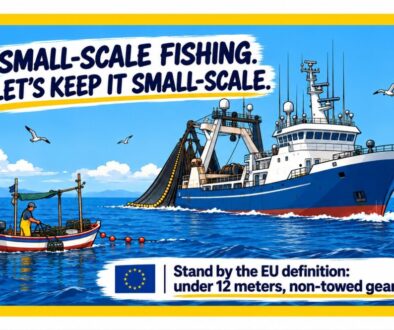
In the Baltic Sea, SSCF account for 92% of the vessel fleet, 77% of the employment in fishing, and contribute 22% of the landed value (STECF AER 2024). However, SSFC catches declined from 58 M Euros in 2018 to 37 M in 2022 (a 36% decline), highlighting the vulnerability of the sector.
Currently, most of the main commercial stocks: cod, salmon, sprat, western herring and Bothnian herring, are at or very close to their all-time record low levels of biomass. It is necessary to build up the stocks by reducing quotas and managing the factors contributing to their poor condition.
The vast majority of quota cuts proposed by the Commission are for stocks which the small-scale fleet depends on. High value stocks like salmon (-27%), western Baltic cod (-84%) and western Baltic spring spawning herring (-50%) are all in bad shape but would benefit more from additional management measures than from only extreme quota reductions.
The marginal environmental benefits derived from these cuts are outweighed by the socioeconomic benefits of maintaining the quota closer to the 2025 TACs. Therefore, we recommend that more is done to address the high levels of natural mortality these stocks suffer from, through active management of non-fish predators and increasing prey availability, and maintain quotas at a level similar to this year.
If quotas are to be reduced, then it will be more effective and equitable if the cuts are borne by the pelagic segment, whose vessels are supplying fishmeal mainly destined for the non-EU market. These vessels capture significant, but unmeasured quantities of high-value commercial species as bycatch. This must be stopped, and monitoring should improve. The total proposed Union TAC of 295.000 tonnes from the Baltic Sea in 2026 is overwhelmingly concentrated in the pelagic segment, with more than 96% of the total proposed quota consisting of herring and sprat. Quota reductions should be focused on these stocks rather than on the small-scale fleet using passive gears which already face several fishery closures and a low level of stock access.
For Bothnian herring the quota reduction is long overdue and has been welcomed by the local (and small-scale) fishing industry. The stock has been in decline for 30 years and a 62% TAC reduction is necessary in order to minimise the risk of impairment to future reproductivity. The Commission proposal will also likely reduce the bycatch of salmon from the industrial pelagic fishery and allow for more prey to be available to local salmon populations.
For western Baltic spring spawning herring in subdivisions 22-24 we strongly recommend that the Council reintroduce the derogation from recent years that allows a quota to be fished by Union fishing vessels of less than 12 meters length using passive gears, despite the ICES advice for zero catches. The Commission proposal to discontinue the exemption for small-scale coastal fisheries would be a travesty, imposing possibly fatal economic consequences on this vulnerable but vital fleet segment.
With regards to the closures for cod spawning we call on the Council to amend Articles 7.2.b and c as well as Articles 7.4.b and c so that the depth exemption is harmonised for both fleet segments. The current exemption which allows some vessels to fish to a depth of 50 metres while the passive gear fleet is limited to 20 metres is not supported by the scientific advice.
The Commission proposal represents an improvement on recent years. We call on Ministers at the October Council to support the recovery agenda of the Commission and set quotas that will allow for larger stocks in the coming years, whilst alleviating the burdens borne by small-scale fisheries.